Regain Sunlight
Reduce dense canopies to let more light into your home and garden.
Manage overgrown trees safely. We provide professional height reduction and canopy management alternatives to traditional harsh lopping.
Serving Invermay and Launceston suburbs
If you are searching for Tree Lopping Invermay to manage an oversized tree, we can help. We assess the tree and recommend the best strategy—whether that's a structural reduction, pollarding, or complete removal.
Fast-growing trees in Invermay can quickly dominate a small yard. We help manage these oversized canopies safely, ensuring they don't become structural liabilities during Launceston's wind events.
Reduce dense canopies to let more light into your home and garden.
Stop heavy branches from rubbing against roofs and gutters.
We provide advice that prevents aggressive, weak epicormic regrowth.
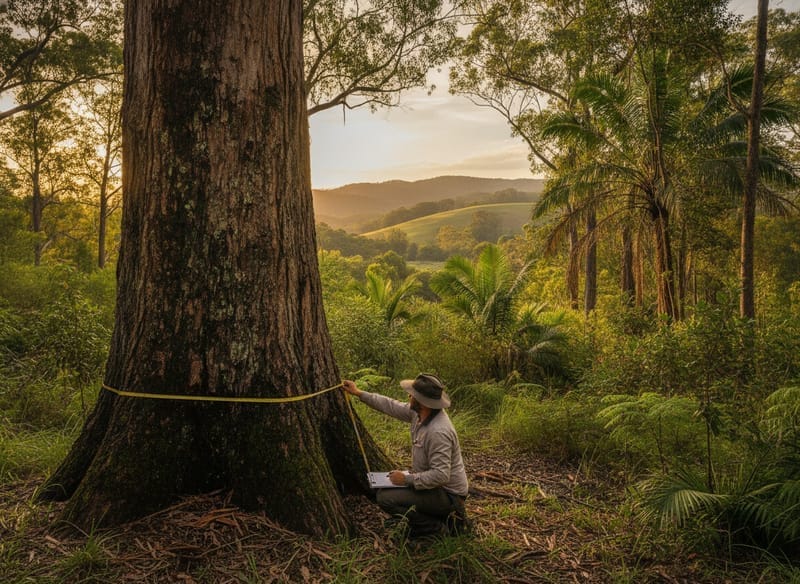
We inspect the overgrown tree and discuss your goals.
We recommend the safest way to reduce the canopy or advise if removal is better.
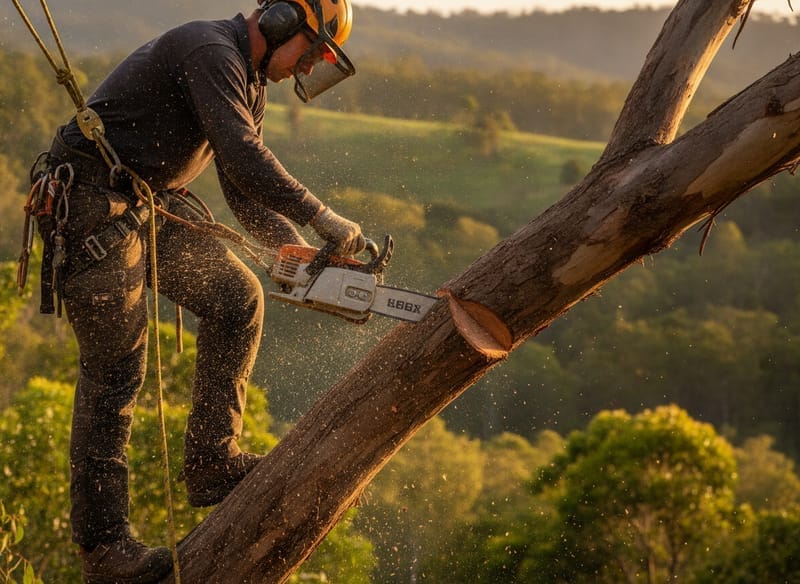
Our team performs the reduction cuts safely and efficiently.
All foliage and timber are chipped and removed.
Living on the flat floodplain of the North Esk River means properties in this suburb often deal with fast-growing, sprawling vegetation in damp soil. If you are looking for professional Tree Lopping Invermay, our team at Launceston Arborist provides safe, expert services to manage oversized and overhanging trees. Homeowners here often ask us to "lop" a tree because it is blocking light, dropping limbs during Launceston's notoriously windy spring weather, or getting too close to rooflines. Whether you are dealing with a massive English oak dominating a compact backyard or overgrown silver wattles leaning toward your boundary, we have the local experience to help. We are a local, established arborist business. We climb, cut, and clear using our own qualified climbers and chipper trucks. We understand the unique conditions of Invermay and how they affect tree stability, ensuring every height reduction job is done with safety, structural integrity, and long-term tree health in mind.
When people ask for tree lopping, they usually just want a problematic, overgrown tree made smaller. However, indiscriminate "topping" or heading-back cuts by unqualified operators or enthusiastic DIYers can cause serious long-term issues for your property. Traditional lopping leaves large, jagged stubs that cannot heal properly. In our cool, wet Launceston winters, these open wounds become prime entry points for severe decay and fungal disease. Worse, a heavily lopped tree responds to the stress by rapidly pushing out weak, fast-growing epicormic shoots. Within a few seasons, your tree is often just as tall as it was before, but now features a highly unstable canopy that is far more likely to snap and fail during a summer storm. The permanent solution is an AS4373-compliant approach. When you call us to reduce the size of a tree, our qualified climbers use precise target pruning and branch collar cuts. Instead of blindly hacking off the top, we identify the specific structural limbs that can be reduced safely without compromising the tree's natural architecture. This means your tree stays at a manageable size, looks aesthetically pleasing, and will not turn into a hazard in a few years. We do the job properly the first time, saving you money on constant, reactive maintenance.
While "lopping" is the term most people use, the Australian Standards strongly discourage topping. Instead, our arborists use specific, standard-compliant pruning methods to achieve the exact size reduction and clearance you are looking for.
This is the safest horticultural alternative to traditional lopping. We selectively prune back the outermost branches to suitable secondary limbs. This reduces the overall height and spread of large species like English elms or ash trees without leaving decaying stubs or triggering weak epicormic regrowth.
If you need a tree lopped because it is hitting your roof or blocking a driveway, we use crown lifting. We carefully remove the lowest branches back to the main trunk. This provides the crucial clearance you need for vehicles or pedestrians while maintaining the upper canopy's health and shape.
Sometimes a tree feels too large simply because the canopy is too dense, blocking winter sunlight to your Invermay property. We selectively remove secondary branches throughout the canopy. This significantly reduces wind resistance during spring gales and allows light to pass through, preserving the tree's natural outline.
If a specific heavy limb is damaged or hanging over a boundary line, we isolate and remove it using proper branch collar cuts. This prevents the need to aggressively lop the entire tree, solving the immediate hazard safely and efficiently.
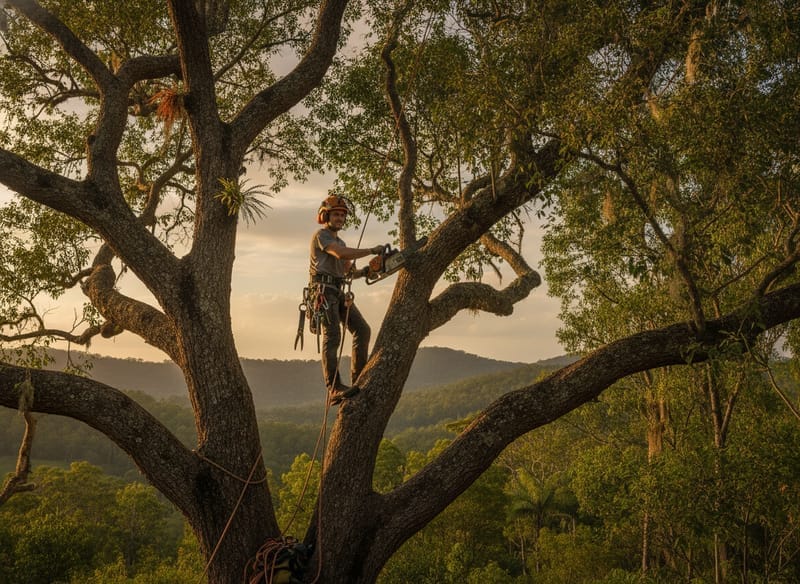
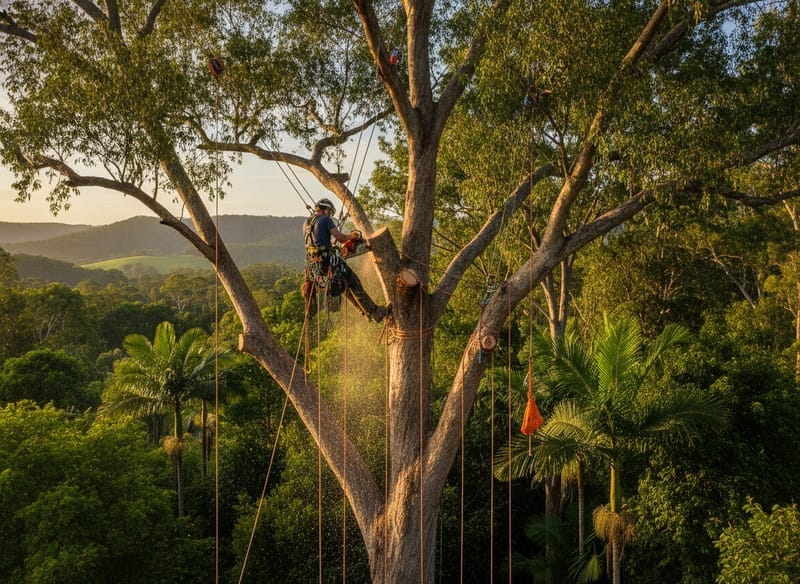
If a tree has outgrown its space entirely or is fundamentally unsafe due to damp floodplain soil shifting, pruning may not be enough. Our team uses rope-access climbing or elevating work platforms to dismantle the tree safely piece by piece.
Our approach to tree canopy management is straightforward, highly professional, and tailored to the unique layout of your property. 1. On-Site Assessment: We start by visiting your Invermay home to understand exactly what you want to achieve. We assess the tree's species, overall health, and any access constraints, determining the best structural pruning technique to get the result you want without ruining the tree. 2. Clear, Upfront Quoting: You receive a detailed, transparent quote outlining exactly which branches will be removed or by what percentage the canopy will be reduced. We explain our methods and why we rely on standard-compliant cuts rather than harmful topping. 3. Safe Execution: On the day, our qualified arborists arrive equipped with top-handle climbing saws, pole pruners, and heavy-duty wood chippers. Because older Invermay properties can have tight, narrow access, our climbers often utilise advanced rope-access techniques to safely dismantle overhanging limbs without needing heavy machinery on your damp lawns. 4. Chipping and Cleanup: As we cut, the ground crew processes all limbs through our chippers. We can leave the fresh mulch for your garden or truck it away completely in our tippers. We rake and blow down the site, leaving your yard impeccably clean.
All our tree reduction and pruning work is carried out strictly in accordance with AS4373 — Pruning of Amenity Trees. We do not take shortcuts. Our leading climbers hold AQF Level 3 in Arboriculture, ensuring every single cut is made with a deep understanding of tree biology and structural integrity. For larger development sites, we also operate in line with AS4970 for tree protection.
Launceston Arborist is fully insured with comprehensive public liability and WorkCover policies. Whether we are reducing a massive English oak on a tight Invermay block or clearing hazardous storm damage, you have complete peace of mind knowing your property and our dedicated team are completely protected.
Working in this specific part of Launceston requires deep local knowledge. Invermay sits on the flat, often wet floodplain of the North Esk River. This damp soil can seriously compromise the root stability of large, heavy exotics like silver birch, flowering plum, and mature ash trees. Managing their canopy weight and wind resistance before the windy spring season is critical to prevent them from uprooting entirely.
When it comes to local regulations, the Tasmanian Planning Scheme - Launceston governs tree works. Fortunately, there is no blanket municipality-wide tree register or strict DBH (diameter at breast height) rule here. However, properties may trigger the Local Historic Heritage Code or the Natural Assets Code, especially if located near waterways.
If you are working on a site where the Cataract Gorge Management Specific Area Plan applies nearby in Trevallyn, our AQF Level 5 consulting arborists can guide you through the process, ensuring your canopy reduction is entirely compliant with City of Launceston requirements.
After a professional crown reduction, your tree will need a little time to adjust. Ensure the root zone remains well-watered during Launceston's dry late-summer stretch, as a reduced canopy can temporarily stress the root system. Do not apply wound paint or sealants to the cuts; our proper branch collar cuts are specifically designed to heal naturally. Keep an eye on the tree during the next spring flush. If you notice any unusual dieback, or if heavy winds cause secondary limbs to crack, contact us. We recommend a brief visual inspection every two to three years to ensure the canopy is regenerating safely and maintaining a structural form.
Costs vary based on the scale of reduction required.
We provide a clear, upfront price before we start.
We manage overgrown trees across the local area.
Contact us for professional advice and a free quote on canopy reduction.
Get a Free Quote