Controlled Size
Keep large trees proportionate to your suburban Mowbray block without destroying their health.
Transform overgrown trees with safe, arborist-approved height reduction and pruning alternatives.
Providing expert tree care across Mowbray and Launceston.
When residents search for Tree Lopping Mowbray, they usually want to reduce the size of an overgrown tree. We deliver that result using proper arboricultural techniques.
In Mowbray, fast-growing species can quickly block views or encroach on boundaries. We use proper drop-crotch pruning techniques to reduce their size without leaving large, decay-prone wounds exposed to Launceston's wet winters.
Keep large trees proportionate to your suburban Mowbray block without destroying their health.
Proper reduction removes top-heavy weight, making the tree much safer during high winds.
A well-maintained, naturally shaped tree adds value to your property, whereas a badly lopped tree is an eyesore and a liability.
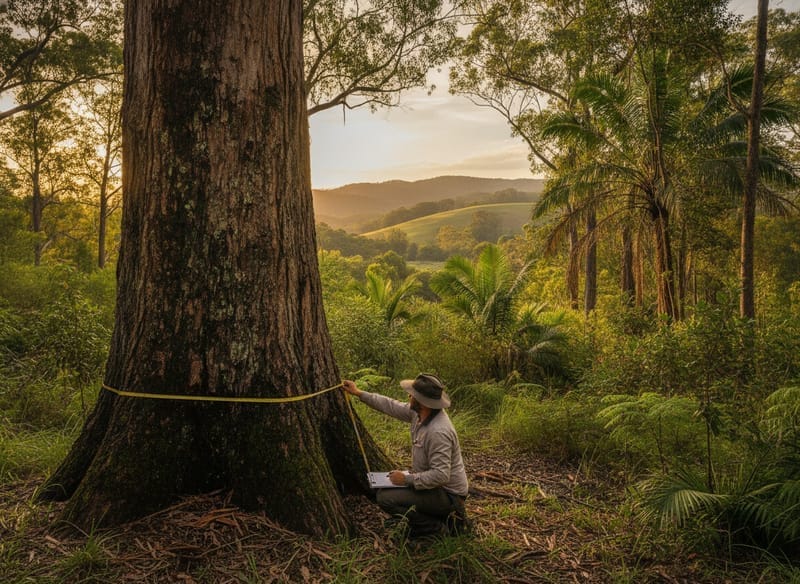
We listen to what you want to achieve with your tree in Mowbray—whether it is more light, better views, or safety.
We explain the best AS4373-compliant method to reduce the canopy without harming the tree.
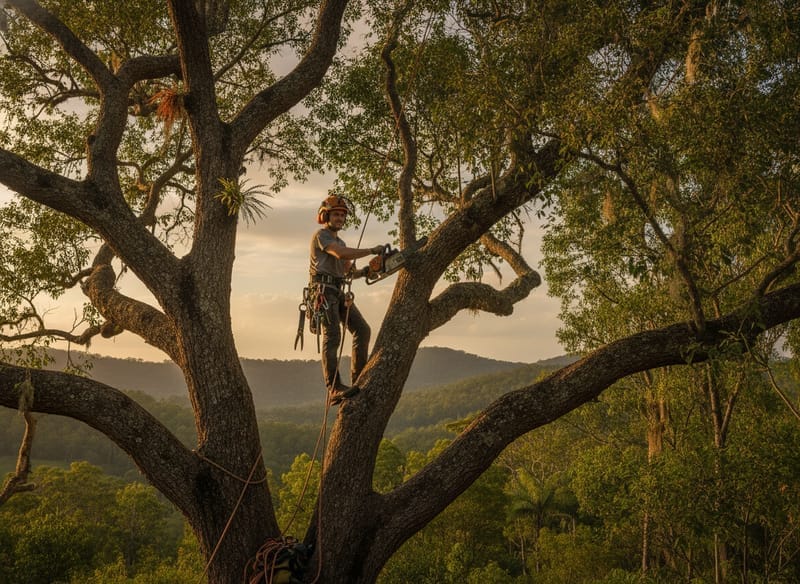
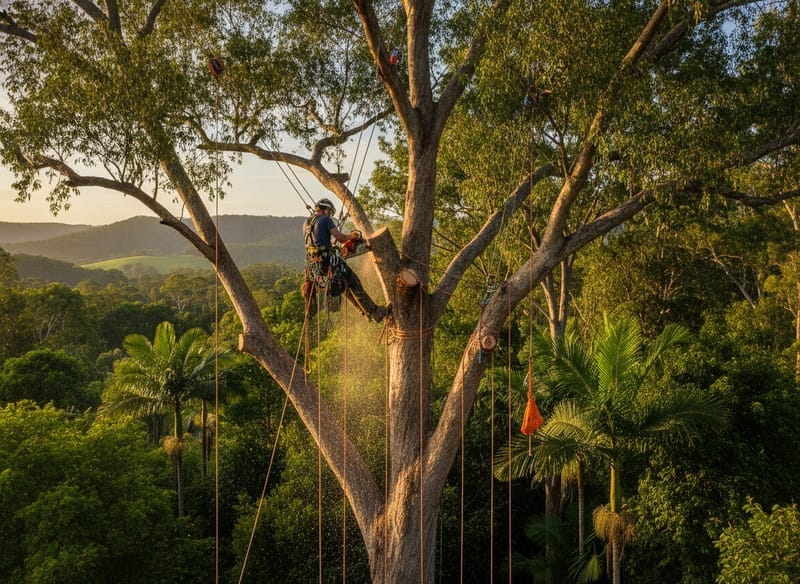
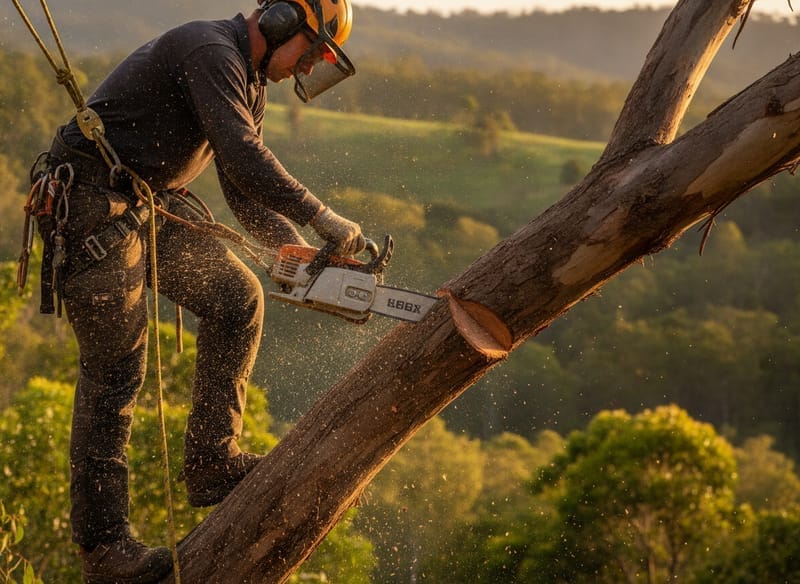
Our climbers carefully reduce the canopy using proper cuts at correct branch junctions.
We remove all debris, leaving your garden completely clear.
When it comes to professional Tree Lopping Mowbray property owners need solutions that balance immediate safety with the long-term health of their trees. Situated in a region known for its magnificent mature exotic canopy and beautiful native bushlines, Mowbray properties often feature large, established trees that eventually outgrow their spaces, encroach on rooflines, or pose risks during Launceston's windy spring and early summer months. While many people use the term "lopping" when they simply want a tree made smaller, traditional topping is highly damaging. As qualified local arborists, our team provides safe, standard-compliant alternatives. Whether you are managing an ageing English oak over a heritage home, dealing with a fast-growing silver wattle near your boundary, or looking to reduce the canopy of a white gum on a steeper block, we have the expertise to manage it. We use advanced climbing techniques and modern equipment to reduce, thin, or lift your trees safely, ensuring your property remains secure without destroying your landscape's aesthetic value.
A common problem in the arboriculture industry is the prevalence of unqualified operators offering cheap, crude "tree lopping". In the strict horticultural sense, lopping or topping involves cutting a tree's branches back to random stubs without respecting the branch collar or the tree's natural growth habits. When a mature silver birch or black peppermint is aggressively topped, it loses a massive percentage of its leaf canopy—its primary energy source. In response to this severe stress, the tree forces out weak, fast-growing epicormic shoots. These new branches are only weakly attached to the outermost layers of bark rather than the solid structural wood. Over time, the large lopping cuts inevitably decay, creating a rotten anchor point for these heavy, fast-growing new limbs, drastically increasing the risk of storm failure. Our solution replaces destructive lopping with AS4373-compliant pruning. Rather than hacking a tree in half, our AQF-qualified arborists assess your goals—such as clearing a roofline or letting more light into the yard—and use techniques like crown reduction, selective pruning, and crown thinning. By targeting specific branches and cutting back to viable growth points (drop-crotch pruning), we achieve the size reduction you want while maintaining the tree's natural shape, structural integrity, and long-term health.
When you ask for tree lopping, we deliver professional canopy management. Our team strictly adheres to the Australian Standard for Pruning of Amenity Trees (AS4373), ensuring every cut supports the health and safety of your tree.
The correct alternative to topping. We selectively reduce the overall height and spread of the tree by cutting branches back to a lateral branch capable of sustaining the remaining limb. This makes the tree smaller while preserving its natural form and preventing rapid, weak regrowth.
Removing the lowest branches of a tree to increase the vertical clearance underneath. This is ideal for properties in Mowbray needing clearance for driveways, pedestrian footpaths, or to keep foliage safely away from lower rooflines and fences.
Carefully removing a portion of the secondary and small live branches from throughout the canopy. This reduces wind resistance—crucial during Launceston's windy spring season—and allows more natural light to penetrate your garden without altering the tree's size.
Targeted removal of specific problem branches, such as a single large limb extending over a structure or powerline. We use proper branch collar cuts to ensure the tree can heal effectively and resist disease.
The systematic removal of dead, dying, or diseased wood from the canopy. This is particularly important for large, ageing exotics like English elms and oaks, mitigating the risk of dead branches dropping unexpectedly onto property or people.
Every Tree Lopping Mowbray project we undertake follows a strict, step-by-step process to guarantee safety, compliance, and a flawless cleanup. It begins with a comprehensive on-site assessment by one of our senior arborists. We evaluate the tree's species, health, and structural condition, identify overhead hazards like service lines, and discuss your specific goals for the property. We then provide a transparent, detailed quote outlining the exact pruning techniques we will use.
Once approved, our operations team plans the job. If your property falls under specific local overlays, we assist in ensuring all works comply with the Tasmanian Planning Scheme. On the day of the job, our crew arrives with the right equipment for the specific site. For tight-access Mowbray blocks, our AQF Level 3 climbers utilize advanced rope-access techniques, while Elevating Work Platforms (EWPs) are deployed where access allows.
We carefully rig and lower branches to the ground using friction devices to protect your garden, fences, and home. Finally, our ground crew processes all material through our high-capacity wood chippers. We rake and sweep the entire work zone, leaving your yard immaculate and hauling all green waste away in our tipper trucks, or leaving the mulch for your garden upon request.
Tree work is inherently hazardous, which is why compliance and safety are the core of our business. Our on-site teams are led by arborists holding AQF Level 3 in Arboriculture, ensuring every cut meets AS4373 standards. For development sites requiring tree protection, our consulting staff hold AQF Level 5 qualifications to provide AS4970-compliant reports.
We are fully public liability insured and carry comprehensive WorkCover for all our employees, giving you complete peace of mind. Our team also holds all necessary high-risk tickets, including Working at Heights, EWP operation, and Traffic Management, allowing us to safely manage complex roadside or over-structure canopy reductions anywhere in Launceston.
Launceston's cool temperate climate features wet winters and a distinct dry late summer, which significantly impacts tree health. Fast-growing deciduous trees can become top-heavy by spring, making them highly vulnerable to Launceston's notorious early summer winds. Proper canopy reduction and thinning are vital for mitigating this wind load without stressing the tree. When planning tree work, it is important to understand local regulations. Under the Tasmanian Planning Scheme - Launceston, there is no blanket municipality-wide trunk size or height rule, and no significant tree register. However, specific overlays dictate what can be done. If your Mowbray property falls under the Natural Assets Code, the Local Historic Heritage Code, or the Landslip Hazard Code, planning permits may be required before significant pruning or removal. Furthermore, the Western Hillside and Southern Gateway Specific Area Plans protect prominent trees over 5m tall. We navigate these rules daily and ensure all our work remains strictly compliant with City of Launceston requirements.
After we have completed canopy reduction or thinning, your tree will need a little support to adjust. During Launceston's dry late summer, we recommend deep, infrequent watering around the tree's drip zone to minimise drought stress. If we have left mulch on-site, applying a 50mm to 100mm layer over the root zone will help retain soil moisture, being careful to keep it away from the trunk collar. Monitor the pruning sites over the following seasons; properly executed AS4373 cuts will form a healthy "doughnut" of wound wood. For fast-growing species or ageing exotics like elms—where local elm leaf beetle pressure is ongoing—we recommend having our arborists back every 3 to 5 years for a routine health and structure inspection.
Pricing for canopy reduction in Mowbray is based on the scale of the work and the access available.
We provide a transparent, upfront quote for our professional reduction services, ensuring no hidden costs.
Offering advanced canopy management across Mowbray and nearby areas.
Call our Mowbray arborists for safe, professional canopy reduction.
Get a Free Quote