Council Approval
Submit DAs with confidence, knowing your tree documentation meets City of Launceston strict standards.
Comprehensive, independent tree assessments for development applications, risk management, and council compliance.
Professional arborist consulting across Norwood and Launceston.
Our Arborist Report Norwood service delivers formal documentation for development, safety, and dispute resolution. Whether you are building an extension or managing a hazardous tree on a protected site, we provide the necessary evidence.
Norwood development often involves navigating established mature trees. A solid AS4970 Tree Protection Plan allows you to maximize your building envelope while keeping the council satisfied.
Submit DAs with confidence, knowing your tree documentation meets City of Launceston strict standards.
Documenting tree risk with a formal report protects you legally if a tree failure occurs.
Know exactly which trees can be removed, which must be retained, and how to protect them during construction.
We discuss your project goals, whether it's a new build in Norwood or removing a risky heritage tree.
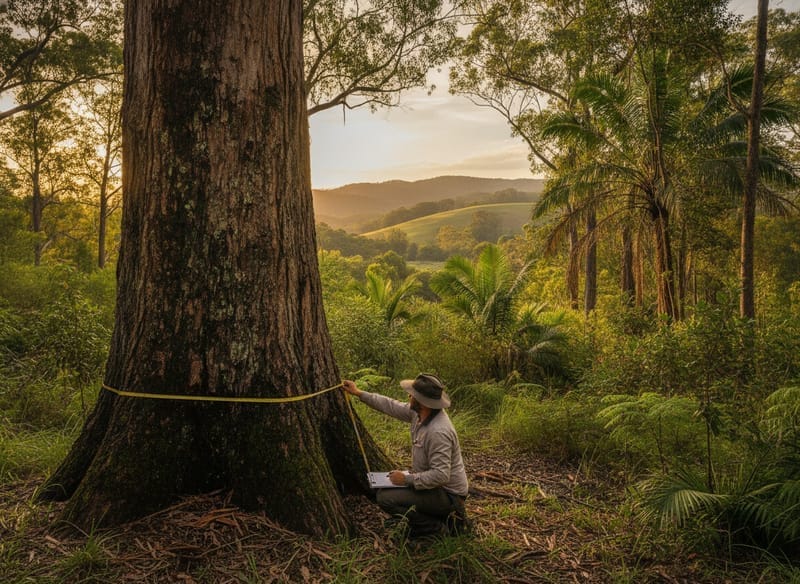
Our consulting arborist conducts a thorough on-site evaluation, taking measurements and assessing tree health.
We calculate Tree Protection Zones (TPZ) and Structural Root Zones (SRZ) according to Australian Standards.
You receive a comprehensive, high-quality PDF report ready for council submission or your own records.
Welcome to Launceston Arborist. For those planning a development, managing a large established garden, or dealing with a hazardous tree on your property, securing a professional Arborist Report Norwood is a critical first step. Norwood, with its blend of large residential blocks and proximity to Launceston's significant tree canopy, frequently requires detailed technical documentation for council applications, property sales, or general peace of mind.
Our team of AQF Level 5 consulting arborists provides comprehensive, site-specific reporting tailored to the exact requirements of builders, property managers, and homeowners throughout the region. Whether you need a tree protection plan for a new architectural build or a hazard assessment for an ageing English oak, our locally based experts deliver the precise, compliant documentation you need to move forward with confidence.
We handle everything from visual tree assessments to formal submissions required under the Tasmanian Planning Scheme. With our local expertise, we ensure your project is properly documented, fully compliant, and environmentally responsible.
Navigating tree regulations and development constraints can be complicated. When homeowners or builders submit a substandard or under-qualified tree assessment to the City of Launceston, the result is almost always costly delays, rejected development applications, or worse—accidental damage to retained trees that breaches local planning codes. A standard landscaping quote or a basic letter from an unqualified tree lopper will simply not satisfy council requirements for a formal tree removal justification or a development site tree protection plan.
This is where our qualified consulting team steps in. By engaging an AQF Level 5 consulting arborist, you ensure your project meets all legal and compliance thresholds from day one. We compile meticulous, fact-based documents that align completely with AS4970 Protection of Trees on Development Sites and AS4373 Pruning of Amenity Trees.
This formal, scientific approach provides local authorities with the exact technical details they demand—such as Structural Root Zones (SRZ) and Tree Protection Zones (TPZ)—to approve your plans without unnecessary back-and-forth. For everyday property owners, a formal risk assessment removes the guesswork, giving you a clear, scientifically backed understanding of whether a large white gum or an aging silver birch poses a genuine hazard to your home.
As your local AQF Level 5 arborists, we provide a full suite of consulting services to suit any residential, commercial, or municipal requirement in the Launceston area.
Essential for any new build, extension, or subdivision near protected vegetation. We assess all trees on and adjacent to the site, providing species identification, diameter at breast height (DBH), and a Safe Useful Life Expectancy (SULE) rating to satisfy the local planning scheme.
When trees are retained on a development site, we outline strict protective measures. This includes calculating Tree Protection Zones (TPZ), specifying root mapping requirements, and detailing protective fencing and mulch layers to ensure trees survive construction stress.
Using Visual Tree Assessment (VTA) methodologies, we evaluate potential hazards. We assess the likelihood of failure and potential targets, documenting structural defects, decay, or disease in large canopy trees like English elms, black peppermints, or mature oaks.
Required when seeking council approval to remove a tree covered by the Natural Assets Code or Local Historic Heritage Code. We provide an independent, evidence-based assessment detailing exactly why the tree cannot be retained through remedial pruning or engineering solutions.
Getting a professional Arborist Report Norwood doesn't have to be a stressful or confusing process. We have refined our workflow to make it as seamless as possible for homeowners, developers, and architects. 1. Initial Consultation and Briefing We start by discussing the exact purpose of the report. Whether it is for a pre-purchase property inspection, a neighbor dispute, or a complex multi-dwelling development application, understanding your end goal ensures we gather the right data from the outset. 2. On-Site Assessment Our AQF Level 5 consulting arborist will visit your Norwood property to conduct a thorough physical inspection. We take precise measurements, including trunk diameter and canopy spread, photograph the site, evaluate soil and root conditions, and map out the exact locations of the subject trees in relation to existing or proposed structures. 3. Research and Data Analysis Back at the office, we cross-reference our field data with the Tasmanian Planning Scheme - Launceston. We check for relevant overlays such as the Landslip Hazard Code or Local Historic Heritage Code, ensuring our recommendations align perfectly with local regulatory requirements. 4. Report Drafting and Delivery We compile all findings into a comprehensive, signed PDF document. Your final report will include clear methodologies, technical diagrams, annotated photographs, and definitive recommendations, ready for immediate submission to the council or your project manager.
Every official assessment we provide is authored by an AQF Level 5 Diploma qualified consulting arborist. This is the exact certification required by the City of Launceston for official development applications and formal tree risk evaluations. Our team operates strictly within the guidelines of AS4970 Protection of Trees on Development Sites and AS4373 Pruning of Amenity Trees, ensuring our recommendations meet all state and national benchmarks. Furthermore, Launceston Arborist is fully insured with comprehensive public liability and professional indemnity cover, giving you total financial protection and peace of mind when relying on our expert site advice.
Delivering an accurate Arborist Report Norwood requires deep local knowledge of Launceston’s specific environmental and regulatory landscape. The Tasmanian Planning Scheme - Launceston does not have a blanket municipality-wide tree size rule. Instead, protection depends heavily on property-specific overlays.
If your Norwood property falls under the Natural Assets Code, the Scenic Protection Code, or is part of a Local Historic Heritage place, a formal report is often mandatory for any significant tree work. Our arborists understand how local dolerite soils and wet winter conditions impact the root structures of native white gums and black peppermints, as well as the city's celebrated exotic canopy of English oaks, silver birches, and ash trees.
We also factor in local hazard drivers like the windy spring season and winter frost, providing risk assessments that truly reflect the environmental realities of living in the Launceston region.
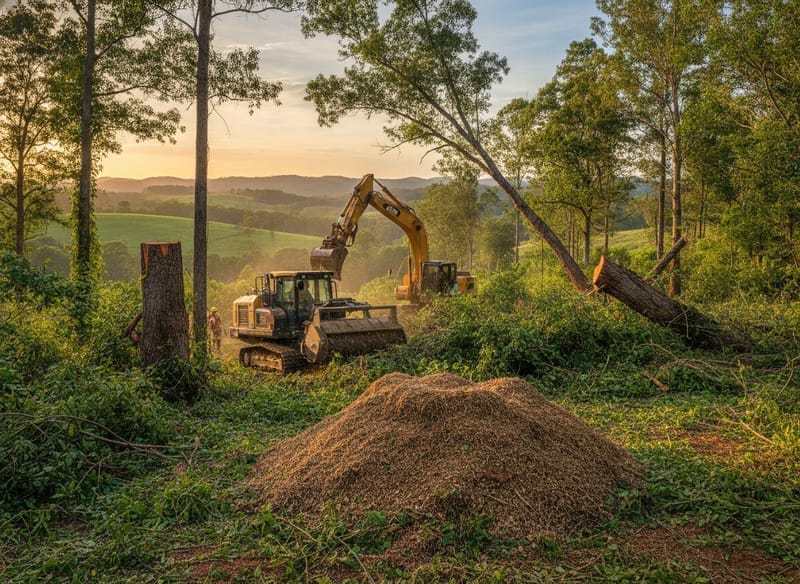
Once you receive your finalized report, the next steps depend entirely on your project's scope. For development applications, you simply submit the provided PDF directly to the City of Launceston alongside your broader architectural plans. If the report outlines a Tree Protection Plan, you must implement the specified protective fencing and ground protection before any earthworks or machinery enter the site.
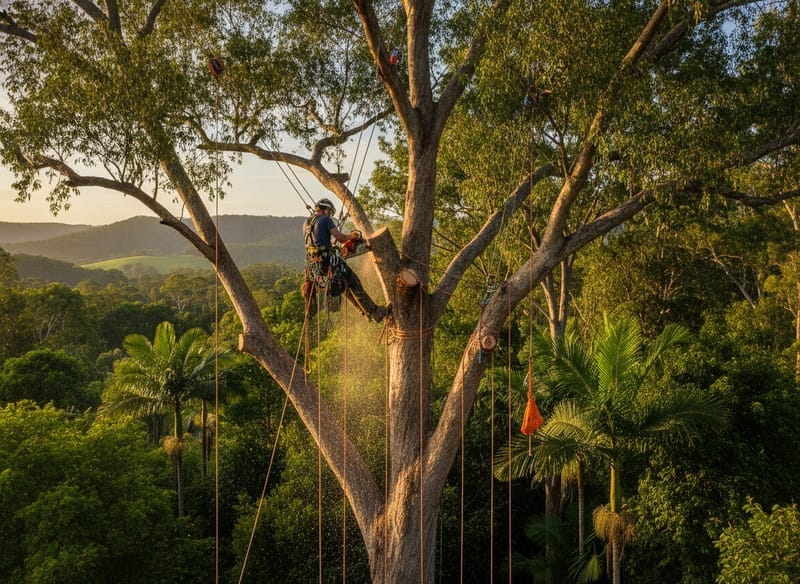
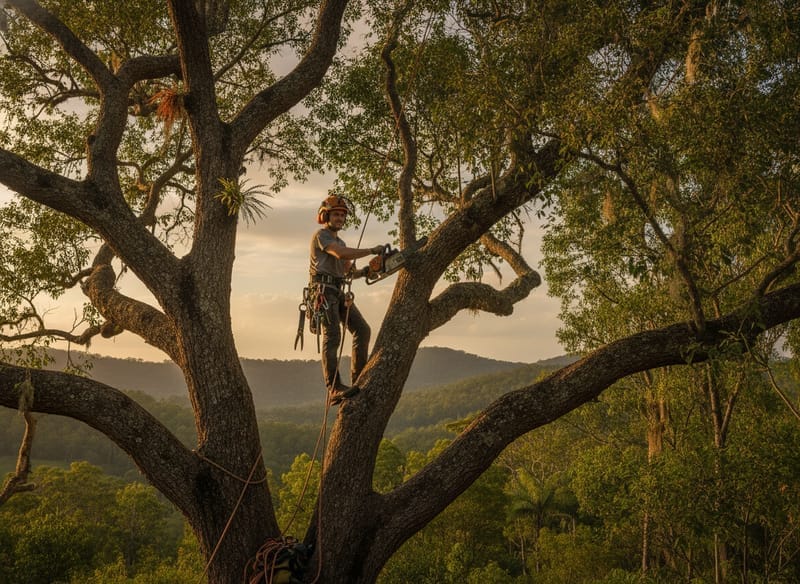
If your report recommends remedial pruning, deadwooding, or a complete hazard tree removal, our team of AQF Level 3 climbing arborists can seamlessly execute the physical tree work. We are fully equipped to carry out all recommended actions in strict accordance with the report's AS4373 guidelines.
Report pricing reflects the complexity of the site and the level of detail required for the specific application.
Contact us to discuss your requirements and receive a fixed-price quote for your arborist report.
We provide consulting arborist services for properties in Norwood and the greater Launceston area.
Speak to our AQF Level 5 consulting arborist in Norwood today.
Request a Quote