Controlled Size
Keep trees manageable without destroying their natural shape or health.
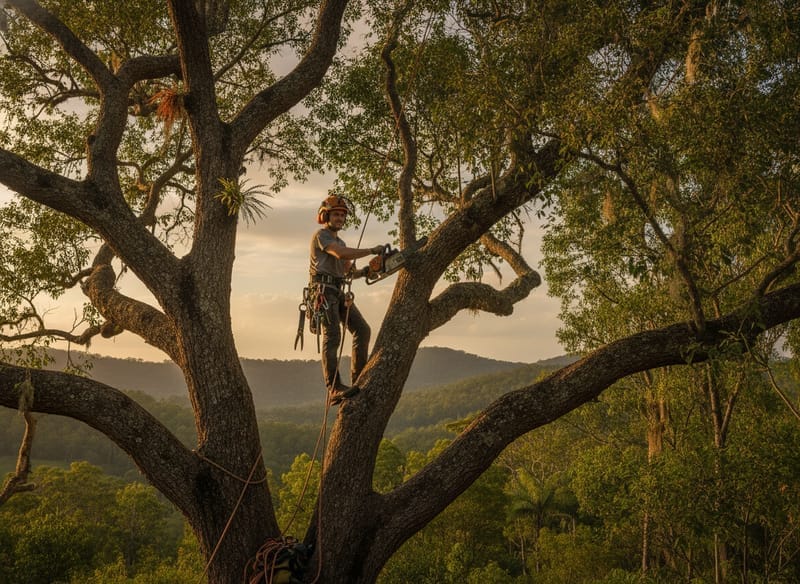
Looking to reduce the size of an overgrown tree? We provide professional canopy management and height reduction that preserves tree health and stability.
Arborist-managed height reduction in Norwood and Launceston.
When locals search for Tree Lopping Norwood, they usually want to manage an overgrown tree that is blocking light or threatening a roof. We deliver that result safely, using arborist-approved techniques.
Many Norwood properties have large trees planted too close to houses decades ago. We can effectively reduce their impact without turning them into ugly, hazardous stumps.
Keep trees manageable without destroying their natural shape or health.
Correct pruning slows aggressive regrowth, saving you money in the long run.
Healthy, well-structured trees add value to your property; butchered, lopped trees look terrible and pose a liability.
We identify why you want the tree 'lopped'—whether it's for light, clearance, or fear of failure.
We suggest AS4373-compliant reduction techniques, or full removal if the tree is wrong for the location.
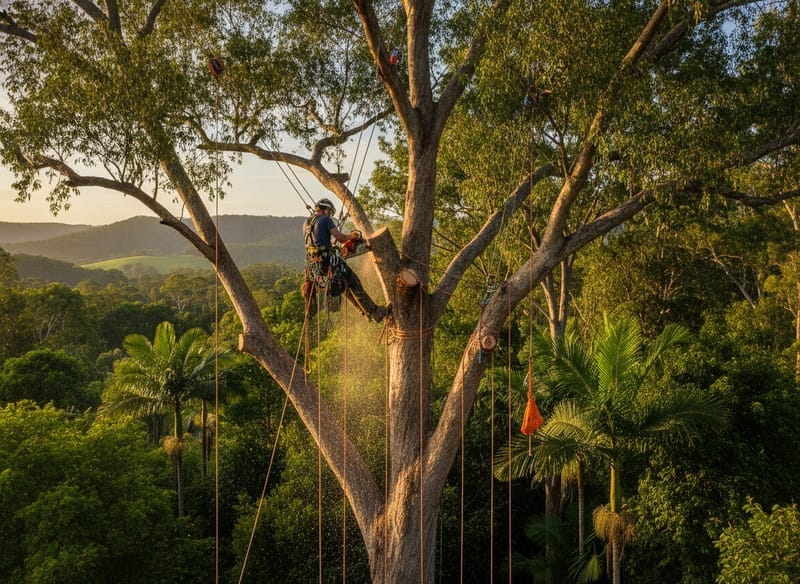
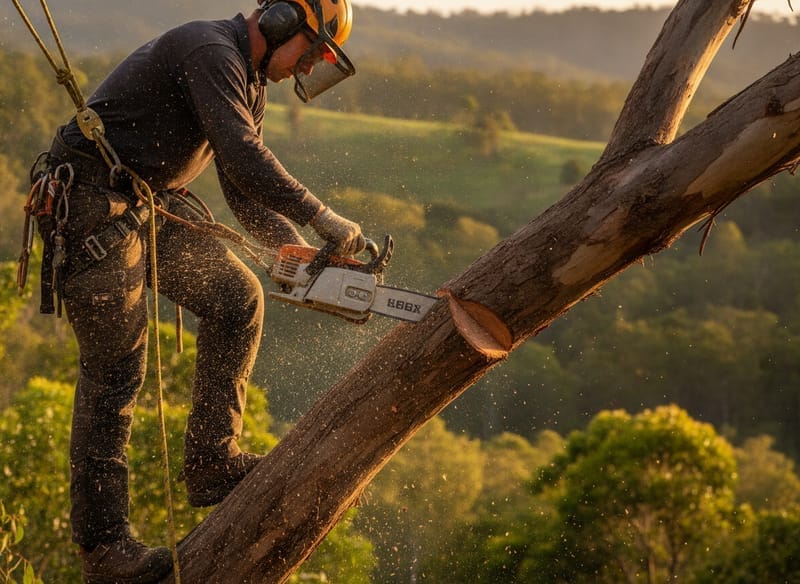
Our arborists use proper techniques to reduce the canopy safely.
We take all the bulk and brush away, leaving your yard neat.
When it comes to professional Tree Lopping Norwood, our team at Launceston Arborist understands exactly what your established gardens, modern subdivisions, and hillside properties require. Norwood features a beautiful, highly valued blend of mature exotic canopies—such as English oaks, silver birches, and English elms—alongside native species like black peppermint, silver wattle, and white gum. While these trees add immense value, shade, and character to our local streetscapes, they can quickly outgrow their space, drop hazardous limbs, or threaten nearby infrastructure, particularly during Launceston's notoriously windy spring and early summer seasons.
Often, local homeowners, builders, and property managers contact us asking to 'lop' a tree to reduce its size, clear an obstruction, or manage storm damage risk. As fully qualified, local arborists, we translate this request into industry-best pruning techniques that safely achieve your goals without destroying the long-term health of your tree. When you book with us, our in-house crew of AQF Level 3 climbing arborists arrives with our own specialised trucks and chippers, ready to deliver safe, precise, and visually appealing results tailored specifically to the cool-temperate Launceston climate.
The term 'lopping' technically refers to the outdated and highly destructive practice of making indiscriminate 'heading-back' cuts across large branches or the main trunk, often referred to as topping. While many property owners use the term simply to mean 'making the tree smaller', actual lopping is one of the most damaging things you can do to a mature tree on your property.
When unqualified operators indiscriminately lop heavy limbs off a white gum or English oak, it removes a massive portion of the tree's live, energy-producing crown. This severely stresses the tree, forcing it into a panic state where it rapidly pushes out epicormic shoots (water sprouts) to survive. These new branches grow aggressively but are only weakly attached to the outer bark rather than the structural heartwood. This creates a severe long-term hazard, as these heavy epicormic limbs are highly susceptible to tearing out and failing during Launceston's strong seasonal winds.
Furthermore, leaving large, ragged stubs exposes the tree to extensive wood decay, fungal infections, and pests like the elm leaf beetle, significantly shortening its lifespan and turning a once-beautiful asset into a rotting liability. Our solution relies strictly on AS4373-compliant pruning methods. Instead of harmful lopping, our qualified climbing arborists utilise targeted crown reduction, thinning, and selective pruning to manage the size and spread of your trees. This ensures we achieve the clearance, aesthetic, and safety you need while preserving the tree's natural shape, structural integrity, and long-term health.
When you request Tree Lopping Norwood, we assess your tree's specific health, species characteristics, and location to determine the best AS4373-compliant technique. Here is how our team achieves your desired size-reduction and clearance outcomes without resorting to destructive, non-compliant topping practices.
The safest, most structurally sound alternative to traditional lopping when a tree has grown too large for its environment. We selectively prune branches back to suitable growth points—specifically, lateral branches that are at least one-third the diameter of the removed limb. This safely reduces the overall height and spread of the canopy while maintaining the tree's natural form and preventing dieback.
The ideal technique for clearing obstructions over driveways, footpaths, fence lines, or roofs without reducing the entire tree. We carefully remove the lowest branches of the canopy to raise the tree's vertical clearance height. This allows maximum light penetration and ensures safe pedestrian or vehicle access while leaving the upper canopy entirely undisturbed.
Launceston's windy spring puts immense mechanical stress on dense, heavily leafed exotic canopies. We selectively remove secondary branches throughout the crown to reduce wind resistance (the 'sail' effect) and improve light and air penetration. This heavily reduces the risk of storm-induced limb failure while keeping the tree's overall size and silhouette intact.
The targeted removal of specific overhanging, dead, or structurally compromised limbs that pose a direct threat to infrastructure, powerlines, or neighbouring properties. All cuts are made precisely at the branch collar—never leaving stubs—which promotes rapid bark healing and prevents wood-decaying fungi from entering the main trunk.
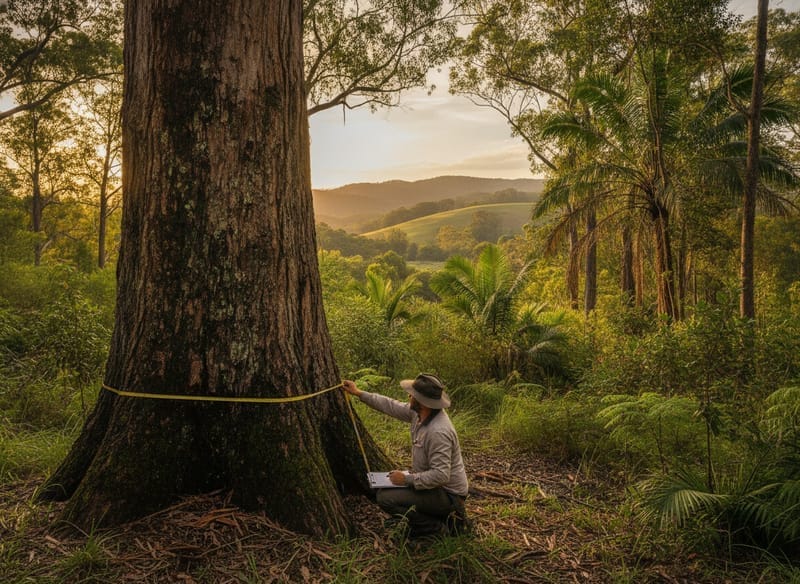
Providing reliable Tree Lopping Norwood requires a structured, highly professional approach that respects your property, your time, and local environmental conditions. Our process begins with a comprehensive on-site consultation. One of our qualified arborists will visit your property to assess the tree in question, paying close attention to its species, health, structural stability, and the specific terrain—whether it is a flat suburban block or a steep, dolerite hillside requiring complex rigging and manual handling.
Once we understand your goals and have provided a transparent, obligation-free quote, our crew arrives fully equipped for the job. For easily accessible trees, we may deploy Elevating Work Platforms (EWPs) or spider lifts to reach the upper canopy safely and efficiently. However, for tight-access backyards, steep gradients, or heavily planted gardens where machines cannot go, our AQF Level 3 climbing arborists use advanced rope-access techniques (SRT and DRT) to navigate the canopy with top-handle climbing saws.
We carefully dismantle and lower heavy branches using friction devices and high-strength rigging ropes, ensuring absolutely nothing damages your roof, garden beds, or fencing below. All removed timber and brush are efficiently processed on-site using our high-capacity 12-inch wood chippers. Finally, we conduct a meticulous site cleanup, ensuring your grounds are left immaculate. We can haul all organic waste away in our tipper trucks, or we can leave the freshly processed mulch behind for your garden if requested.
Tree work is inherently dangerous, particularly when operating at heights, managing heavy timber, or working near powerlines. We take safety, training, and industry compliance incredibly seriously. Every pruning and canopy reduction job our team undertakes strictly adheres to AS4373 (Pruning of Amenity Trees), ensuring your trees remain structurally sound and vibrant for years to come.
Our business is fully insured with comprehensive Public Liability coverage and WorkCover for all our employees, giving you complete peace of mind when our trucks and machinery operate on your property. Our on-ground and in-tree teams hold all mandatory tickets, including AQF Level 3 in Arboriculture, Working at Heights, EWP operation, Chainsaw cross-cut and felling units, and First Aid. When council applications or development site assessments are required, our AQF Level 5 consulting arborists are fully authorised to provide the necessary formal reports.
Understanding local regulations is crucial before commencing any major tree work. Under the Tasmanian Planning Scheme - Launceston, there is no blanket municipality-wide tree size or height rule. However, whether you need a planning permit depends entirely on where your property sits and the specific zoning overlays that apply to it. For properties in Norwood and the surrounding Launceston suburbs, the most common planning instruments we encounter are the Natural Assets Code (which covers mapped priority vegetation) and the Local Historic Heritage Code, which strictly controls any lopping or removal of trees that form part of a listed heritage place. On the steeper hillsides surrounding the city, the Landslip Hazard Code may also dictate what vegetation can be safely modified. Fortunately, State exemptions generally allow for the routine removal of dead wood, vital treatments for diseases, and immediate works required to eliminate an unacceptable safety risk or to clear branches damaging a lawful building. Our local team is highly experienced in navigating the Tree Lopping Norwood regulatory landscape and can advise you on whether your proposed canopy work falls under an exemption or requires an AQF Level 5 arborist report for council approval.
Once our team has completed the required canopy reduction or selective pruning, proper aftercare is essential to help the tree recover and thrive. While correct AS4373-compliant pruning minimises physiological stress, the tree will still need adequate hydration to heal its pruning wounds, particularly during Launceston's notoriously dry late-summer months. Deep, infrequent watering around the Structural Root Zone is highly recommended. We advise applying a thick layer of high-quality organic mulch around the base of the tree—ensuring you avoid direct contact with the trunk—to retain soil moisture and regulate root temperature. Keep an eye out for any unusual epicormic growth or signs of pest ingress, particularly on susceptible exotic species. Should you notice any storm damage following a heavy wind event, or if you simply need advice on scheduling your next routine pruning cycle, contact our arborists for a prompt follow-up assessment.
Pricing for canopy reduction is competitive and based on the complexity of access and volume of material.
Contact us for a free quote on safe, effective tree canopy reduction in Norwood.
We manage overgrown trees across Norwood and nearby suburbs.
Contact our arborists for professional height reduction in Norwood.
Get a Free Quote