Streamline Council Approvals
Submit your DA with confidence, knowing your tree reports meet all council requirements.
Independent, AQF Level 5 arborist reports for council applications and hazard assessments.
Providing expert arborist consulting across South Launceston and the wider LGA.
Our arborist report South Launceston services provide the formal documentation required for planning, safety, and disputes.
With overlays like the Landslip Hazard Code and Scenic Protection Code active near South Launceston, having a local arborist who understands the City of Launceston's specific requirements is critical for planning success.
Submit your DA with confidence, knowing your tree reports meet all council requirements.
Document the health and safety of your trees to protect yourself against negligence claims.
Implement AS4970-compliant protection zones to ensure significant trees survive the construction process.
We discuss your project requirements and determine the specific type of report needed.
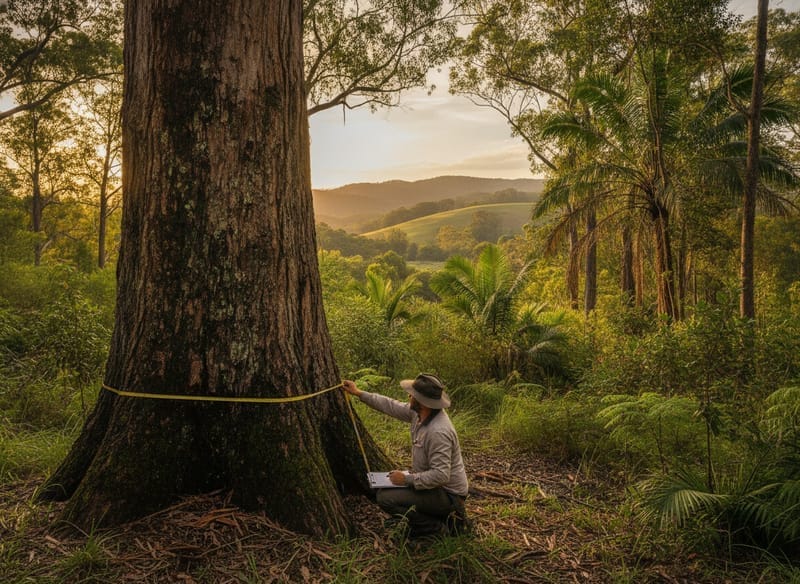
Our consulting arborist visits the site to collect data, measure trees, and assess health.
We evaluate the data against the Tasmanian Planning Scheme and Australian Standards.
We compile a comprehensive, evidence-based written report.
You receive a finalised PDF report ready for submission to the council or your insurer.
When you need a reliable Arborist Report South Launceston, our team at Launceston Arborist provides the expert documentation required for your property. Whether you are a homeowner planning an extension, a developer mapping out a subdivision, or a property manager dealing with a hazardous white gum near a boundary, a professional arborist report is the crucial first step.
South Launceston and its surrounding suburbs—including Newstead, West Launceston, and Trevallyn—feature a unique mix of steep hillside blocks, established residential gardens, and some of the most significant exotic canopy in the country. Before you undertake building work, tree removal, or large-scale pruning, the City of Launceston often requires formal documentation to satisfy local planning codes.
We deliver comprehensive, compliant, and legally recognised reports that help you navigate council regulations, protect your assets, and keep your development project on track without unnecessary delays.
A common mistake property owners make is submitting a basic quote or a generic letter from an unqualified tree lopper instead of a formal arborist report. When council planners or insurance assessors review your documentation, they look specifically for an AQF Level 5 Consulting Arborist. Without this qualification, your application will face immediate rejection, costing you valuable time, increasing holding costs, and frustrating your builders. An unqualified assessment often misidentifies tree species, underestimates the Structural Root Zone (SRZ), or recommends outdated practices like "topping" or "lopping." These poor practices are explicitly discouraged under AS4373 standards because they leave large stubs, promote weak epicormic regrowth, and accelerate decay. Furthermore, failing to account for Launceston's specific planning scheme requirements can lead to heavy fines if a protected tree is accidentally damaged during earthworks. Our team solves this by providing industry-standard documentation from the outset. We conduct thorough Visual Tree Assessments (VTA) and apply AS4970 standards for development sites. By commissioning an expert Arborist Report South Launceston, you ensure that all retention values, risk assessments, and tree protection zones are accurately mapped out. This gives council planners, architects, and your site managers the exact, legally defensible information they need to proceed safely.
We author a complete range of AQF Level 5 arborist reports tailored to your specific project needs across Launceston, ensuring full compliance with Australian Standards.
Required by the local council when a DA proposes works near protected vegetation. We assess trees on your site, providing species identification, Diameter at Breast Height (DBH), and Safe Useful Life Expectancy (SULE) ratings to inform retention and removal recommendations.
Essential for construction sites to prevent root and canopy damage. We calculate accurate Tree Protection Zones (TPZ) and Structural Root Zones (SRZ). The report specifies mandatory fencing, root mapping, mulch protection, and supervised work zones during the build.
Utilising modern Visual Tree Assessment (VTA) methodologies, we evaluate the health and structural integrity of mature trees. We document defects, target zones, and the likelihood of failure, providing crucial data for pre-purchase inspections, duty-of-care obligations, and school or strata management.
When a protected tree needs to be removed due to advanced disease, structural decline, or unacceptable safety risk, we provide the formal evidence required by council. This includes detailed photography, causation analysis, and recommendations for suitable replanting.
Our reporting process is straightforward, transparent, and designed to provide you with actionable, council-ready documentation without unnecessary delays. First, you contact us to discuss your property and the specific reason for the report. Whether it is a DA, a neighbour dispute, or a safety concern regarding a large exotic tree, we will ask for basic site details. We then provide a clear, upfront quote based on the number of trees involved and the complexity of the site. Next, our consulting arborist visits your South Launceston property. We conduct a thorough on-site inspection, identifying species, measuring trunk diameter and canopy spread, and assessing overall vitality. For development sites, we will also review your proposed architectural or engineering plans to determine the exact impact construction will have on the existing root systems. Finally, we compile all field data into a comprehensive, signed PDF report. This document includes high-quality site photography, detailed CAD-style mapping for tree protection zones, and clear, actionable recommendations. We deliver the final document directly to you, ready for immediate submission to the council, your certifier, or your insurance provider.
All our reports are authored by an AQF Level 5 Consulting Arborist, the mandatory industry benchmark required by the City of Launceston for formal development and hazard documentation. We operate strictly in accordance with AS4970 (Protection of Trees on Development Sites) and AS4373 (Pruning of Amenity Trees) to ensure every recommendation is legally and technically sound.
Launceston Arborist is fully insured with comprehensive public liability, professional indemnity, and WorkCover insurance. Whether you are dealing with a complex commercial development or a simple residential hazard assessment, our reports carry the necessary authority and professional backing to satisfy council planners, insurers, and site managers.
Securing a compliant Arborist Report South Launceston means understanding the specific codes of the Tasmanian Planning Scheme - Launceston. While there is no blanket tree control across the municipality, properties often fall under specific overlays that dictate what can and cannot be done.
For instance, if your property is affected by the Local Historic Heritage Code or the Natural Assets Code, removing or significantly pruning established exotics like English elms, English oaks, or native black peppermints requires formal justification. Similarly, steep hillside blocks around West Launceston and Trevallyn may trigger the Landslip Hazard Code, where retaining structural tree roots is critical for soil stability.
We also regularly consult on properties within the Western Hillside and Southern Gateway Specific Area Plans. Under these plans, any prominent tree over 5 metres tall with a 1-metre circumference requires careful assessment before building works can commence. We also factor in local issues like elm leaf beetle pressure, ensuring your report addresses the exact environmental overlays affecting your address.
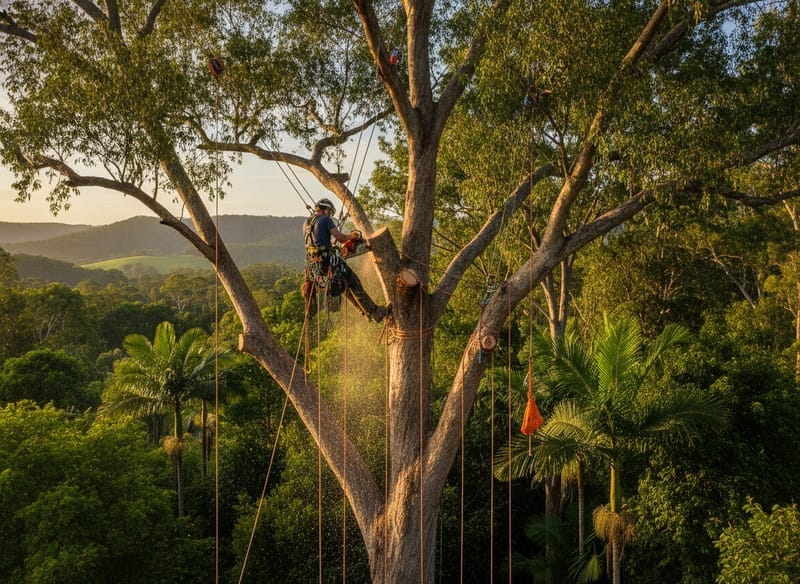
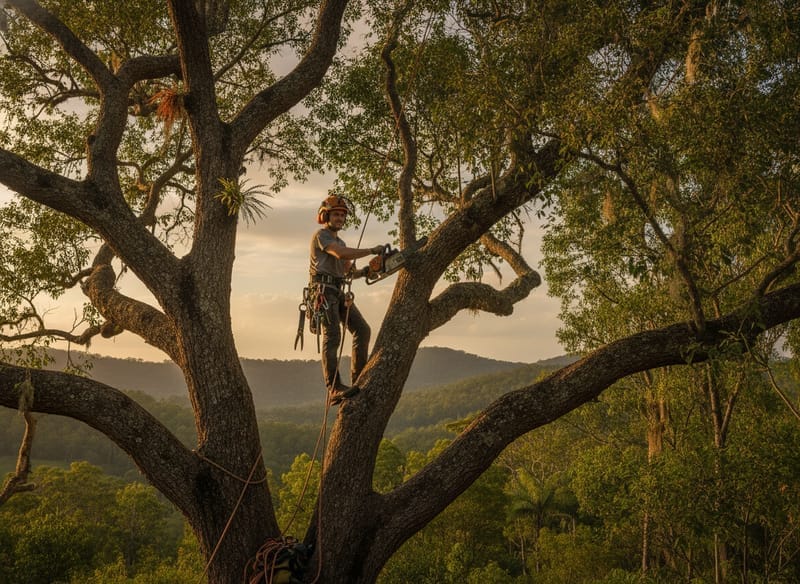
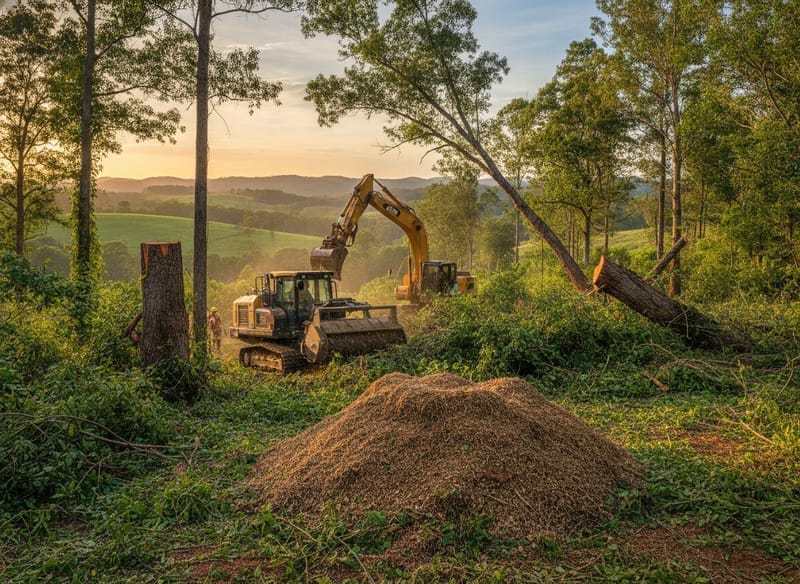
Once your report is complete and any necessary council permits are granted, the physical tree work can begin. If your project involves a Tree Protection Plan, you must install the specified protective fencing and signage before any excavation machinery enters the site. Our AQF Level 3 climbing arborists can subsequently carry out any approved pruning, deadwooding, or removal work in strict adherence to the report's recommendations. If you notice any sudden changes in a retained tree's health during construction, or if heavy Launceston spring winds cause unexpected branch damage, call us to reassess the tree's condition and update your management plan.
Consulting fees reflect the complexity of the assessment and the detail required in the report.
Contact us for a fixed-price proposal on your required arborist report.
Consulting arborist services provided across the municipality.
Speak to our AQF Level 5 consulting arborist to get your project moving.
Enquire Now