Restore Your Property
Get your yard, driveway, and paddocks back to normal quickly after a storm.
Comprehensive post-storm cleanup. We safely remove fallen limbs, broken canopies, and storm-damaged trees to restore safety to your property.
Assisting properties across St Leonards, Waverley, and Newstead after severe weather.
Our Storm Damage Tree Removal St Leonards service goes beyond immediate emergencies, focusing on the comprehensive cleanup of your property after a major weather event.
St Leonards's large white gums and peppermints often suffer limb drop during the high winds of Launceston's spring. We are experienced in clearing this heavy timber safely.
Get your yard, driveway, and paddocks back to normal quickly after a storm.
We spot and eliminate broken branches caught in the canopy that could fall days later.
We process and haul away all the messy debris, so you don't have to lift a finger.
We walk the property to identify all fallen timber and overhead hazards.
We tackle the most dangerous or obstructive debris first.
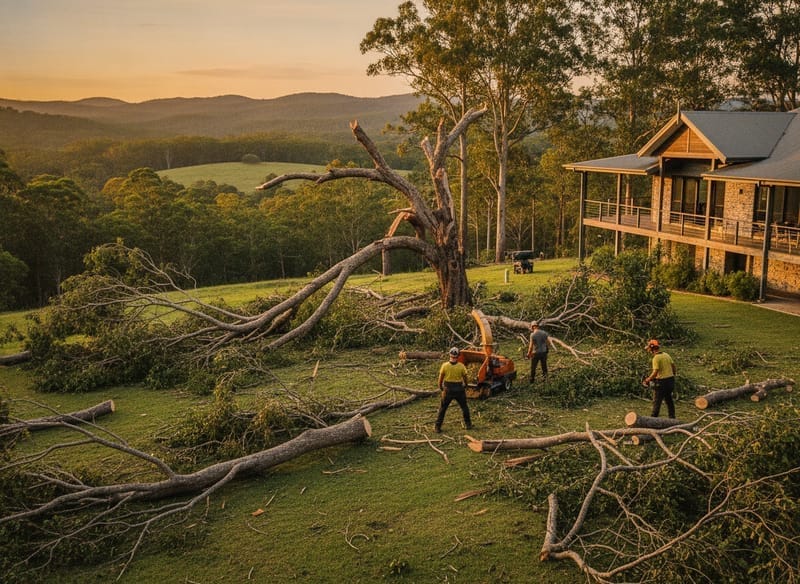
All fallen branches are chipped, and large timber is blocked up or removed.
We double-check the remaining canopy to ensure no broken branches are left behind.
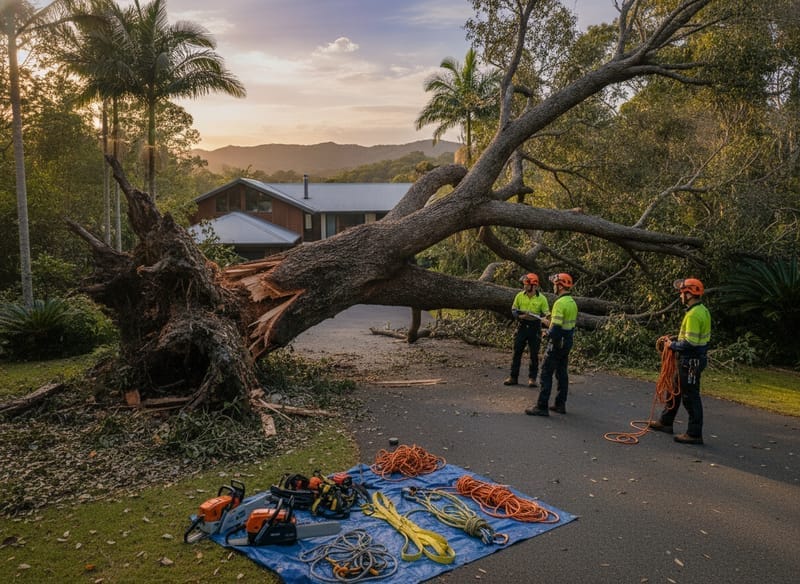
When severe spring and early summer winds sweep through the Tamar Valley, property owners often wake up to a massive mess. Whether a heavy branch has crashed through a roof or an entire white gum has uprooted in saturated soil, prompt Storm Damage Tree Removal St Leonards is essential to secure your property and keep your family safe. We understand the unique challenges of our cool temperate climate, where sudden gales and heavy winter rains can compromise even the most established trees on acreage and residential blocks. At Launceston Arborist, our team of qualified local climbers and riggers responds quickly to make your site safe. We handle everything from shattered limbs hung up in English oaks to massive paddock eucalypts that have failed across boundary fences. St Leonards features a beautiful mix of native black peppermint and large exotic canopies, but when extreme weather hits, these heavy crowns become massive liabilities. We don't just hack away at the wreckage. Our arborists carefully assess the structural integrity of the remaining canopy, cleanly dismantling the hazards while preserving whatever we safely can. If you are dealing with the aftermath of a severe weather event, our local crew is equipped with the heavy-duty gear and local expertise to clear the danger efficiently.
Tackling storm debris with a chainsaw from the shed is one of the most dangerous things a homeowner can do. Fallen or partially collapsed trees are essentially giant, unpredictable springs. They are loaded with extreme tension and compression forces. One wrong cut can cause a massive trunk to snap back, roll, or split violently, leading to severe injury or catastrophic damage to nearby structures. Furthermore, under-qualified operators or 'loppers' often make a bad situation much worse. They might resort to improper topping or leave large, jagged stubs on standing trees that have suffered crown damage. This directly violates the AS4373 standard for pruning amenity trees, leaving your trees vulnerable to rapid decay, weak epicormic regrowth, and a heightened risk of future failure during the next storm. Our qualified arborists take a systematic, safety-first approach to every job. We understand exactly how wood behaves under extreme stress. Before any cutting begins, we assess the root plate, trunk integrity, and the canopy for hidden 'widow-makers'—broken branches suspended high in the canopy that could drop without warning. By using correct dismantling techniques, we safely relieve the pressure in fallen timber. For trees that have suffered partial damage but can be saved, we perform clean, AS4373-compliant target pruning to remove the shattered limbs, promoting healthy compartmentalisation and saving the tree's long-term structure.
Our response to severe weather events requires specialised equipment and a highly methodical approach to safely dismantle unpredictable, heavily loaded timber.
We walk the property to categorise hazards systematically. Immediate risks over houses, power lines, or access routes are prioritised, followed by hung-up limbs, standing-but-compromised trees, and finally open ground cleanup.
Using professional high-powered ground saws, we carefully read the bound tension in fallen stems. We make precise stepped relief cuts to ensure the timber falls safely without violent snapping, rolling, or barber-chairing.
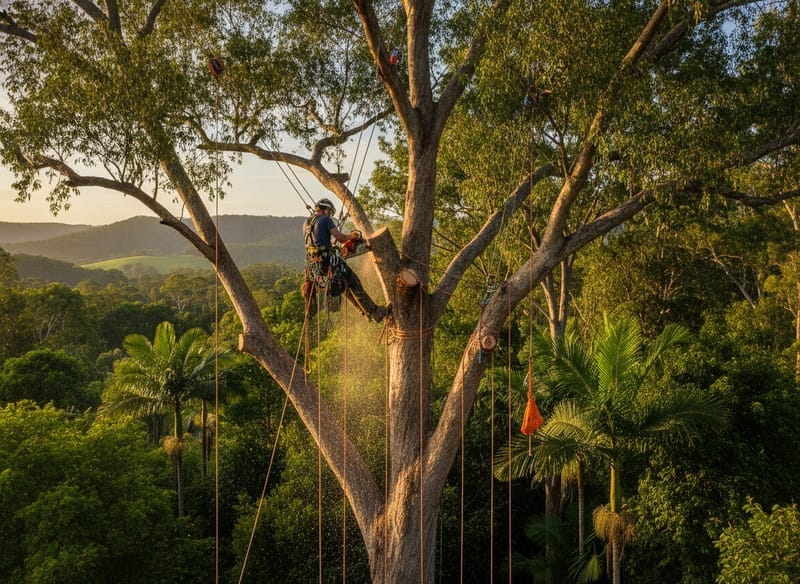
For compromised trees on steep St Leonards blocks where machinery cannot reach, our AQF Level 3 climbers use double-rope techniques and friction devices to safely lower shattered limbs without damaging the property below.
When a tree's structural integrity is completely compromised by storm damage, making it unsafe to physically climb, we utilise cherry pickers or tracked spider lifts to safely dismantle the hazardous canopy from outside the drop zone.
Once the hazards are safely on the ground, high-capacity wood chippers process the canopy into mulch, while skid steers and tipper trucks are used to efficiently clear the heavy logs and debris from your property.
When extreme winds and saturated soils bring trees down across Launceston, our process is designed to secure your property as quickly and safely as possible. Step 1: Emergency Triage and Make-Safe Upon arrival, our first priority is securing the site. We perform a rapid risk assessment to identify immediate hazards—such as a white gum resting on a roof line, or shattered silver wattle branches suspended over a driveway. We tape off dangerous zones and formulate a safe extraction plan. Step 2: Photographic Evidence for Insurance Before we move a single branch, we take comprehensive photographs of the damage, the tree's position, and any impacted structures. We provide detailed, itemised quotes outlining the necessary work, making it straightforward to submit the claim directly to your insurance provider. Step 3: Safe Dismantling and Removal Using specialised rigging, EWPs, or advanced climbing techniques, our arborists systematically dismantle the hazards. We focus on relieving tension safely and lowering heavy timber with absolute precision. If a tree is completely uprooted, we process the root plate and trunk sequentially to prevent the root mass from suddenly rolling back into the hole. Step 4: Cleanup and Restorative Care We never leave you with a mess. All debris is processed through our chippers, and heavy logs are hauled away. Finally, we inspect any remaining standing trees for secondary damage, performing clean restorative cuts to ensure they remain safe for the future.
When dealing with hazardous storm damage, you need absolute certainty that the operators on your property are fully qualified and comprehensively insured. Our team consists of AQF Level 3 certified climbing arborists, meaning we hold the formal qualifications for advanced tree felling, aerial rigging, and safe chainsaw operation.
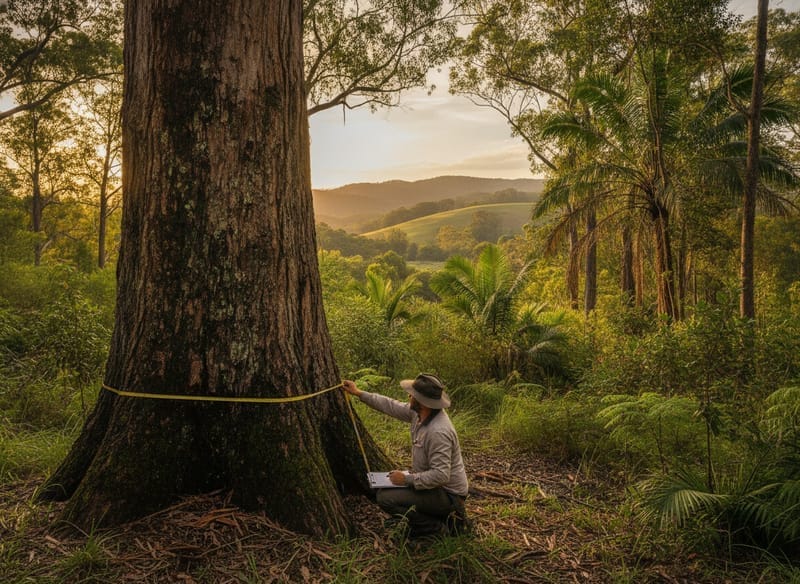
We carry full public liability insurance and WorkCover for our entire crew, protecting you from any financial risk while we manage hazardous trees on your property. All our restorative pruning on storm-damaged canopies strictly adheres to AS4373 standards. If an insurance claim requires formal documentation or local council compliance checks, our AQF Level 5 consulting arborist can provide the necessary structural assessments.
Executing Storm Damage Tree Removal St Leonards requires a deep understanding of our specific local environment. This area features a unique mix of rural-residential paddock eucalypts—like white gum and black peppermint—and large established exotics such as English oaks, elms, and ash trees. During our intense spring wind season, fully leafed deciduous trees carry immense wind load, making them highly susceptible to catastrophic limb failure. Additionally, the wet winters often leave the ground saturated, leading to whole-tree root-plate failures in exposed areas or on the steeper dolerite hillsides stretching toward Newstead and Relbia. Under the Tasmanian Planning Scheme - Launceston, there are specific state exemptions for emergency tree work. While overlays like the Natural Assets Code or Local Historic Heritage Code apply in certain areas, the exemptions allow for the removal of trees that present an unacceptable safety risk or are actively damaging a building. Our local arborists ensure all emergency clearing complies with Launceston City Council requirements.
After a major weather event, the trees that remain standing often carry unseen structural stress. It is crucial to monitor your surviving canopy over the following weeks. Look for newly formed cracks in the trunk, lifted soil around the root plate, or hanging branches that may have shifted post-storm.
If your trees have received restorative pruning, ensure they get adequate water during the dry late summer to aid recovery. We highly recommend booking our AQF Level 5 consulting arborist for a comprehensive hazard assessment of your remaining large trees before the next spring storm season hits. Identifying and removing weak, heavily weighted branches early is the most effective way to prevent future emergencies.
Storm cleanup is priced based on the volume of debris and the complexity of removing broken branches from remaining trees.
We provide comprehensive, no-obligation quotes for all post-storm cleanup work.
We provide post-storm tree services to St Leonards and surrounding Launceston areas.
Contact our St Leonards team for safe, efficient storm damage tree removal.
Get a Cleanup Quote