Streamline Approvals
Provide the exact documentation the council needs, avoiding DA delays.
Formal, detailed tree assessments by AQF Level 5 qualified arborists for development applications, risk management, and council compliance.
Providing expert arborist consulting in Summerhill and across Launceston.
An Arborist Report Summerhill is essential when navigating property development, neighbour disputes, or significant tree health concerns.
If your Summerhill property falls under the Natural Assets Code or Local Historic Heritage Code, a formal arborist report is often the only way to secure council approval for tree works.
Provide the exact documentation the council needs, avoiding DA delays.
Have documented, expert proof of a tree's condition in case of disputes.
Know definitively whether a tree can be saved or must be removed.
We discuss why you need the report and what parameters must be covered.
Our consulting arborist visits your Summerhill property to inspect the trees, soil, and site conditions.
We evaluate the findings against relevant Australian Standards and Launceston Planning Codes.
You receive a comprehensive written report with findings, photos, and recommendations.
If you are planning a development, resolving a neighbour dispute, or managing a declining English oak on your property, securing a professional Arborist Report Summerhill is the critical first step. At Launceston Arborist, we provide comprehensive, legally recognised documentation for homeowners, developers, and property managers throughout Summerhill and the surrounding suburbs of Launceston. Whether you are navigating council requirements for a new build or assessing a hazardous white gum near your home, our AQF Level 5 consulting arborists deliver clear, actionable insights. We understand that local planning approvals require precise data. Our team works closely with you to ensure your project complies with all regulations while prioritising the safety and amenity of your property's valuable tree canopy. An arborist report is more than just a quick visual check. It is a detailed, scientifically backed document that assesses tree health, structural integrity, and the potential impact of proposed works. We provide the expertise you need to keep your development on track or ensure your family's safety beneath mature branches.
One of the most common mistakes property owners make is submitting a tree assessment written by an under-qualified tree lopper. The local council will strictly reject development applications or removal requests that are not accompanied by a report from an AQF Level 5 consulting arborist. Relying on a basic quote or an informal letter often leads to costly project delays, redesigned plans, or heavy council fines.
Without a proper understanding of the Tasmanian Planning Scheme, an unqualified contractor might advise you to remove a tree that sits within a Local Historic Heritage Code area or a Landslip Hazard Code zone. If you proceed without the right documentation, you risk substantial legal penalties. Furthermore, incorrect assessments of a tree's Safe Useful Life Expectancy (SULE) can result in the unnecessary removal of a healthy tree, or conversely, leaving a highly hazardous black peppermint standing dangerously close to your home.
Our solution is straightforward. We provide rigorous, independent, and compliant arborist reports. We conduct thorough Visual Tree Assessments (VTA) and document every necessary metric, from Diameter at Breast Height (DBH) to Structural Root Zones (SRZ). By partnering with our qualified team, you gain the certainty that your paperwork will pass council scrutiny the first time, saving you weeks of bureaucratic frustration and ensuring your tree management is based on sound arboricultural science.
We produce a wide range of specialised reports to meet the specific requirements of the local council, builders, and property owners. Each report is meticulously researched and formatted to align with Australian Standards.
Required when planning construction near existing trees. We detail tree inventory, species identification, and provide retention recommendations in strict accordance with AS4970 (Protection of Trees on Development Sites).
Essential for active building sites. We map out Tree Protection Zones (TPZ) and Structural Root Zones (SRZ) to safeguard mature trees during excavation, ensuring your builders know exactly where protective fencing and mulch must go.
Utilising internationally recognised Visual Tree Assessment (VTA) methods, we evaluate defects, target zones, and failure likelihood. This is vital for duty-of-care documentation on residential blocks, schools, or strata properties.
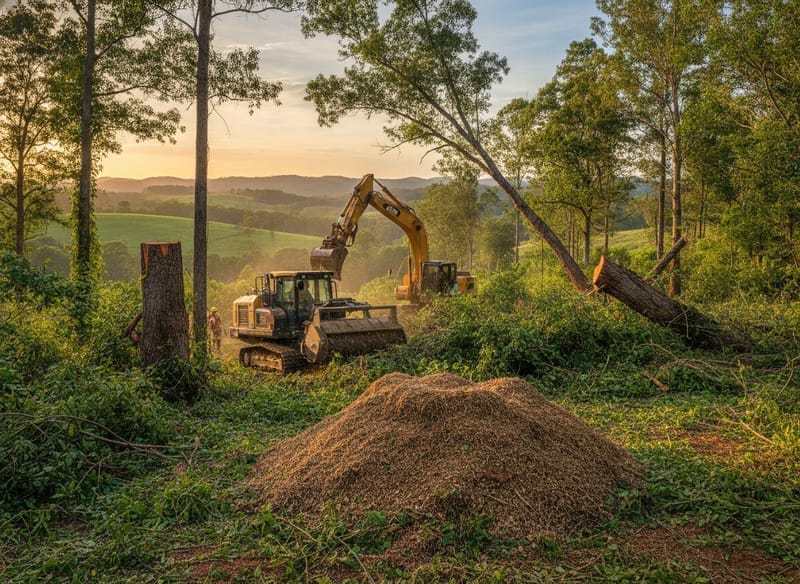
When a tree poses an unacceptable safety risk or impacts local infrastructure, we document its structural decline, disease presence, and risk profile to justify its removal to the council, often including replanting recommendations.
Securing an Arborist Report Summerhill begins with a brief phone consultation. We discuss your specific needs—whether it is a pre-purchase property inspection, a development application, or concern over a storm-damaged silver wattle. We then schedule a site visit at a time that suits you.
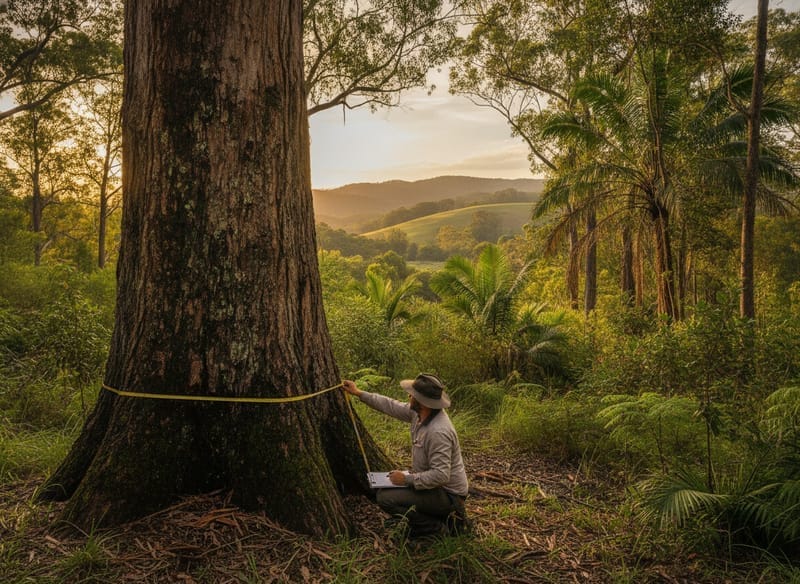
During the site inspection, our AQF Level 5 consulting arborist will conduct a comprehensive Visual Tree Assessment (VTA). We measure trunk diameters, map canopy spreads, evaluate soil conditions, and photograph significant structural defects or signs of disease. If the report is for a development, we will also plot the trees against your proposed site plans to calculate exact Tree Protection Zones.
Back at the office, we compile these field findings into a formal, highly detailed PDF document. We cross-reference your specific location against the Launceston Local Provisions Schedule to ensure all relevant overlays, such as the Scenic Protection Code, are addressed.
Finally, we deliver the completed report directly to you or your project manager. We take the time to walk you through our findings and recommendations, ensuring you fully understand the next steps for council submission, tree retention, or scheduled pruning works.
Every report we author is firmly grounded in Australian Standards. We strictly apply AS4970 (Protection of Trees on Development Sites) for construction-related assessments and AS4373 (Pruning of Amenity Trees) when recommending remedial canopy work.
To write these documents, our consulting arborists hold the mandatory AQF Level 5 Diploma of Arboriculture. This is the minimum qualification accepted by the City of Launceston for formal planning documentation.
We are also fully covered by comprehensive Public Liability insurance and Professional Indemnity insurance. This dual coverage guarantees that our advice is financially backed, protecting developers, home buyers, and property managers who rely on our structural assessments and tree retention strategies.
Working in Launceston requires a deep understanding of our unique environment and regulatory framework. The local climate, defined by wet winters, dry late summers, and strong spring winds, heavily impacts tree stability. We regularly assess mature exotics like English elm and silver birch, alongside towering native white gums and black peppermints that characterise our local landscape.
Unlike some municipalities, Launceston does not have a blanket tree control rule based solely on trunk size. Instead, the Tasmanian Planning Scheme dictates that planning permits depend entirely on overlays. In Summerhill and nearby steep suburbs like Trevallyn or West Launceston, properties often fall under the Landslip Hazard Code or the Natural Assets Code.
Our local knowledge is crucial here. We know exactly how to structure an arborist report to address these specific codes, or the Local Historic Heritage Code common in East Launceston. We ensure your submission directly answers the council's requirements for hazard mitigation and vegetation protection in these sensitive zones.
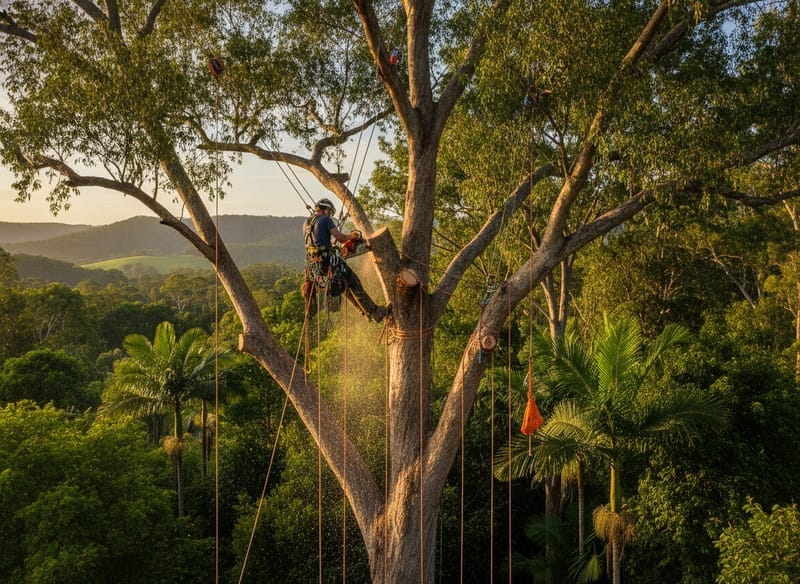
Once your report is submitted and your planning permit or development application is approved by the council, the physical work can begin. If your report outlines a Tree Protection Plan, you must install the specified protective fencing and ground protection before any machinery enters the site. For approved pruning or tree removal recommendations, our AQF Level 3 climbing arborists are ready to execute the work precisely as outlined in the document, ensuring full compliance with AS4373. We recommend keeping your report safely filed for future reference. For large retained trees, schedule a follow-up visual inspection every two to three years, or following severe Tasmanian storm events, to ensure their ongoing health and stability.
Report pricing depends on the number of trees and the purpose of the assessment.
We offer upfront quotes for all arborist reports. Typical single-tree reports start at $800.
We provide AQF Level 5 consulting across:
Contact our AQF Level 5 consulting arborist in Summerhill today.
Request a Quote