Healthier Trees
Strategic cuts encourage strong regrowth and prevent disease.
AS4373-compliant tree pruning to protect your property and preserve the health of Launceston's beautiful mature canopy.
Serving West Launceston and surrounding suburbs.
Our Tree Pruning West Launceston services are designed to balance your needs with the biological limits of the tree.
In West Launceston's windy spring conditions, a dense, unpruned canopy catches wind like a sail. Proper thinning reduces this stress while maintaining the tree's beauty.
Strategic cuts encourage strong regrowth and prevent disease.
Targeted removal of structural faults prevents unpredictable branch failure.
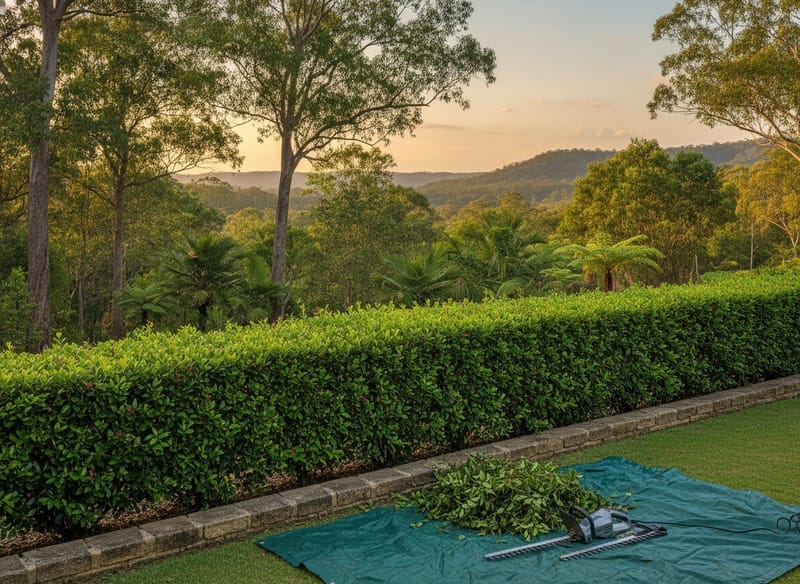
Keep your garden looking well-maintained with beautifully shaped trees.
We identify what the tree needs (thinning, lifting, deadwooding).
We outline exactly what cuts will be made to align with AS4373.
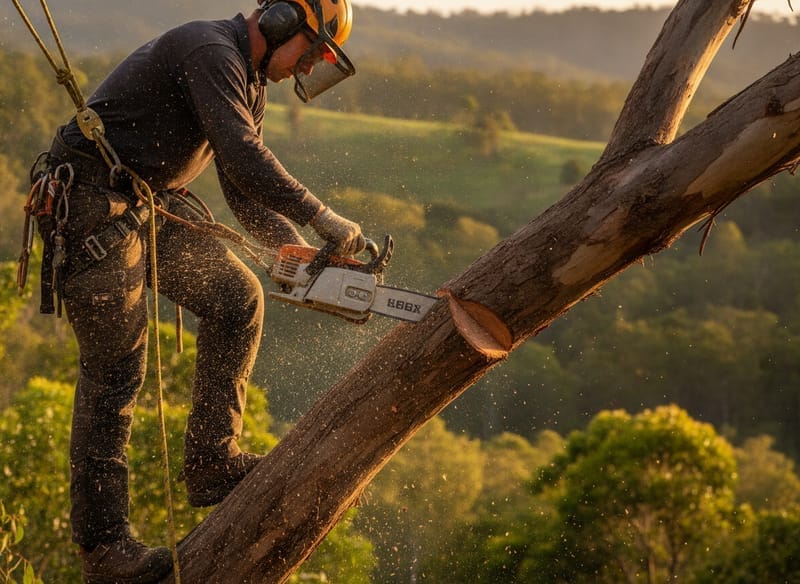
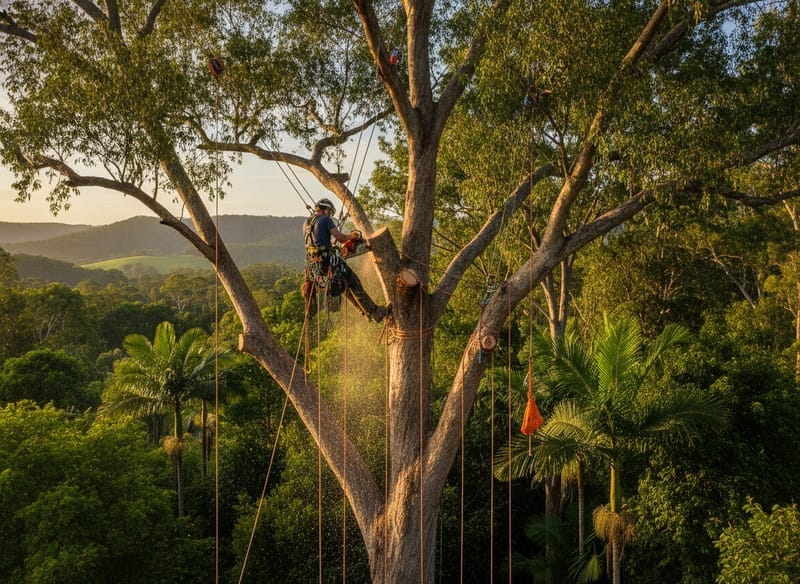
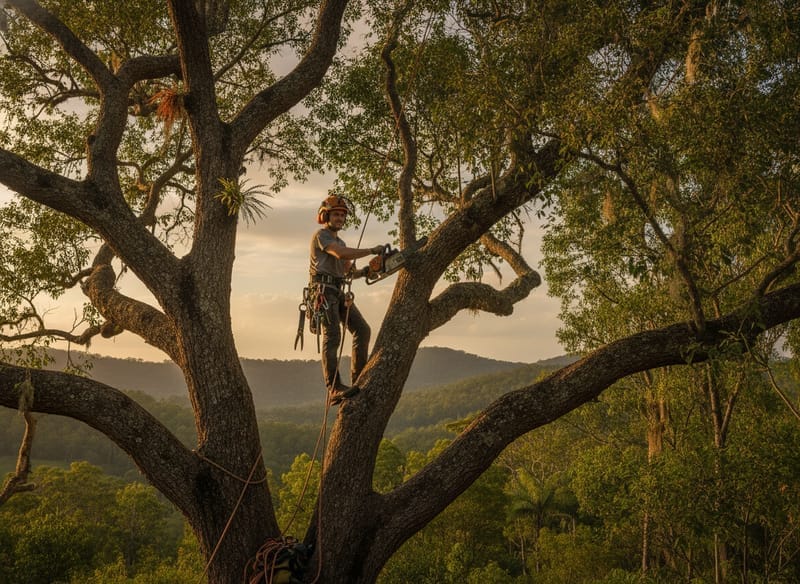
Our arborists access the canopy safely and make precise cuts.
All prunings are chipped and removed from the property.
Maintaining the spectacular canopy of our cool temperate region requires highly specialized care. If you are a homeowner, property manager, or developer looking for expert Tree Pruning West Launceston, our team at Launceston Arborist is here to deliver safe, professional, and standard-compliant results. From the steep dolerite hillsides bordering the Cataract Gorge to the established residential streets lined with heritage oaks and elms, we understand exactly what it takes to manage local trees effectively.
Whether you own a hillside property with towering white gums overhanging your roof line, or you manage a historic garden needing careful deciduous canopy management, proper pruning is essential. We do not just cut branches; our climbers assess tree health, structure, and seasonal wind load to ensure your trees remain structurally sound and beautiful year-round.
Our climbers and ground crew are proud locals who know the terrain, the local species, and the weather patterns. We take immense pride in preserving the established character of West Launceston, Trevallyn, Riverside, and the wider Launceston community. When you hire us, you are getting our dedicated trucks, our highly trained arborists, and our unwavering commitment to the safety of your property.
A common and costly mistake property owners make is hiring under-qualified operators who practice "topping" or "lopping" instead of proper, standard-compliant tree pruning. Lopping involves hacking branches back to arbitrary points, leaving large, ugly stubs. This practice is explicitly discouraged under Australian Standards because it causes irreversible damage, promotes weak, unpredictable epicormic regrowth, and drastically accelerates internal wood decay. In West Launceston, where large exotic deciduous trees like English elms and silver birches grow alongside native black peppermints and white gums, structural integrity is paramount. Our region is exposed to severe wind loads during the windy spring to early summer stretch from September to January. An over-thinned canopy, or one compromised by lopping, catches this wind poorly and is far more likely to suffer catastrophic limb failure during a gale. Furthermore, poor pruning techniques create entry points for pests and pathogens. With Tasmania being some of the healthiest English elm stock left anywhere, maintaining the health of our local elm population through hygienic, precise branch collar cuts is critical. Our team strictly adheres to proper pruning standards, ensuring every cut promotes rapid healing and long-term tree stability, preventing your valuable shade trees from becoming hazardous liabilities.
As qualified arborists, we utilize specific techniques outlined in AS4373 (Pruning of Amenity Trees) to improve tree structure without compromising health. We never engage in topping or heading back.
We selectively remove small live branches throughout the canopy. This reduces wind resistance—crucial for large exotics catching the spring gales in West Launceston—and allows more light penetration while preserving the tree's natural form. We strictly limit removal to a maximum of 25–30% of live foliage per prune.
We carefully prune the lower branches to raise the canopy's height. This provides essential clearance for driveways, pedestrian paths, road sightlines, and underlying structures, all without damaging the main trunk.
Unlike harmful lopping, we selectively shorten branches back to a suitable lateral branch to reduce the overall height or spread of the tree. This highly technical cut is useful for managing large trees on tight gorge-side blocks where space is limited.
We thoroughly inspect the canopy to remove dead, diseased, or damaged limbs. Deadwooding eliminates the hazard of falling branches, protecting your home, vehicles, and family, particularly during late summer drought stress when limb drop is common.
For young street and garden trees, we establish a strong structural framework, ensuring a single dominant leader. For mature trees, we target specific issues, such as clearing a roofline or safely resolving weak co-dominant stems.
Every job begins with a comprehensive, on-site assessment. We visit your property to evaluate the tree's species, overall health, structural defects, and site access constraints. Given the narrow, winding streets and steep, difficult driveways common in West Launceston and Trevallyn, access planning is a critical part of our initial consultation.
Once we provide a clear, detailed quote and you approve the work, our experienced climbers arrive on site. While we utilize Elevating Work Platforms (EWPs) where the terrain allows, our team specializes in advanced rope-access climbing. Using single-rope (SRT) and double-rope techniques, our arborists can safely navigate the canopies of massive white gums or heritage oaks situated on steep, inaccessible dolerite slopes where machinery simply cannot reach.
Using precision top-handle climbing saws and silky hand saws, we execute every cut cleanly at the branch collar, leaving no stubs. For large, heavy limbs overhanging houses or fragile landscaping, we utilize complex rigging systems and friction devices to lower the wood safely to the ground under complete control.
Finally, our ground crew processes all removed branches through our industrial wood chippers. Your property is left spotless, with the option for you to keep the fresh mulch for your garden or have us remove it entirely in our tipper trucks.
Professional tree pruning at height is high-risk work that demands proper qualifications and comprehensive insurance coverage. Our team includes AQF Level 3 practicing arborists for hands-on climbing and technical cutting, and we work alongside AQF Level 5 consulting arborists when formal reports are required by the local council.
We are fully public liability insured and carry mandatory WorkCover for our entire crew, giving you complete peace of mind when we are suspended above your roofline. All our pruning work strictly complies with AS4373 standards, and our staff hold current, necessary tickets for Working at Heights, EWP operation, safe chainsaw use, and First Aid.
Understanding the local council regime is vital before undertaking any significant tree work. The Tasmanian Planning Scheme - Launceston does not have a blanket tree control or municipality-wide trunk size rule. Instead, regulations are based entirely on specific property overlays.
In West Launceston, many properties fall under the Cataract Gorge Management Specific Area Plan, where tree pruning or removal is assessed carefully to protect the natural character of the gorge edge. Additionally, the Landslip Hazard Code applies to many of our steeper dolerite hillsides, and the Local Historic Heritage Code protects significant trees on heritage-listed properties. There is also the Western Hillside Specific Area Plan, which regulates prominent trees over 5m tall with a circumference of 1m or more.
Our team knows this local landscape inside out. Whether you need specialized care for a silver wattle or complex rigging for a black peppermint hanging over a cliff, we ensure all work aligns with City of Launceston requirements, advising you when a formal permit is necessary.
After professional tree pruning, your tree will naturally begin to compartmentalize the precise branch collar cuts we have made. During Launceston's dry late summer, we highly recommend deep watering to minimize drought stress, which helps the tree recover energy and prevents unexpected summer limb drop.
Keep an eye on the canopy over the following seasons. While our AS4373-compliant methods are specifically designed to prevent aggressive epicormic growth, monitoring tree health is always good practice. We recommend having our arborists return every 2 to 3 years for a routine inspection, particularly before the windy spring storm season, to ensure your canopy remains structurally sound and safe.
Pruning costs depend on the complexity of the canopy and the time required to navigate it.
We offer free, no-obligation quotes to ensure you get exactly the right service.
Pruning services available in:
Keep your canopy safe and healthy with West Launceston's trusted arborists.
Request a Quote