Immediate Safety
We remove the immediate threat to your family and neighbors.
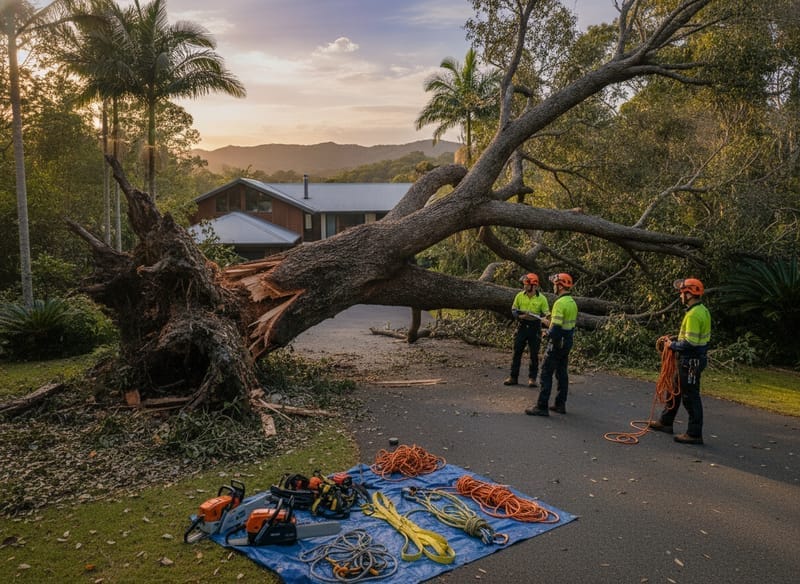
We make safe and remove dangerous, fallen, or storm-damaged trees threatening your home or safety.
Help across Youngtown and all Launceston suburbs.
High winds and wet dolerite soils can cause catastrophic tree failures. Our emergency tree removal Youngtown service is designed to stabilize the situation, protect your property, and clear the danger.
Launceston's windy spring weather and heavy winter rains frequently lead to limb failures in older deciduous trees and whole-tree failures in tall eucalypts on the Youngtown and Relbia fringes. It goes to the top of the list to secure these sites.
We remove the immediate threat to your family and neighbors.
Removal stops a resting tree from causing deeper structural damage to your roof.
We reopen your driveway so you can get vehicles in and out.
Call us. We will assess the severity over the phone and dispatch a crew.
Upon arrival, we secure the area and stabilize the hazard.
We use advanced techniques to relieve tension and dismantle the tree off structures.
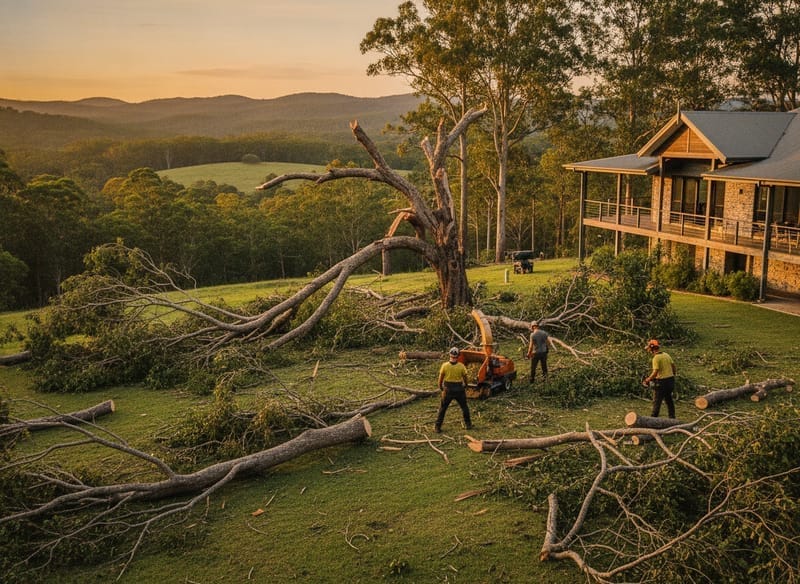
Once safe, we chip the branches and clear the site, leaving it ready for repairs.
When fierce spring winds sweep through the Tamar Valley or heavy winter rains saturate our local dolerite soils, established trees can fail without warning. If a massive white gum or mature English oak has crashed onto your roof, driveway, or fence line, you need Emergency Tree Removal Youngtown right now. Our local, rapid-response arborists are ready to secure your property and eliminate immediate hazards. We understand the panic that sets in when a towering black peppermint uproots or a heavy limb hangs precariously over your family home. For acreage owners, property managers, and suburban homeowners in Youngtown, we provide a calm, highly skilled approach to complex storm damage. Our team arrives with the right equipment—from heavy-duty chainsaws to complex rigging gear—to safely dismantle dangerous timber before it causes further destruction. We do not farm work out to a network; when you call us, our qualified climbers and our trucks turn up to protect your property.
When a tree is structurally compromised, split, or actively leaning on a structure, the internal tension within the timber is immense. Attempting DIY removal with a hardware-store chainsaw is a recipe for disaster. Cutting a wind-thrown tree without understanding compression and tension wood can cause the trunk to snap violently—commonly known as a "barber chair"—which can result in fatal injuries.
Similarly, hiring an unqualified operator to lop or drag away a fallen tree often leads to secondary property damage. Under-equipped teams lack the rigging knowledge to lift heavy timber off a crushed roof without collapsing the structure further, and their actions can frequently void your insurance claims if further damage occurs.
Our qualified arborists approach emergency work differently. We operate under strict safety protocols and align our cutting techniques with AS4373 standards, ensuring any remaining canopy is balanced and secure. We know how to read structural root failures and complex hung-up limbs. By using advanced rope-access techniques and heavy rigging, we safely lower massive branches piece by piece, protecting your home, your family, and your insurance claim. Do not risk your safety on an unstable site—let our trained professionals handle the crisis.
Every storm-damaged site is unique, requiring specific arborist techniques to dismantle failed timber safely. Here is how our team handles high-risk scenarios in the Launceston region.
Our first priority is neutralizing the immediate threat. We assess the structural integrity of the failed tree, isolate the drop zone, and secure hung-up limbs using load-bearing rigging lines to prevent unexpected falls while we work.
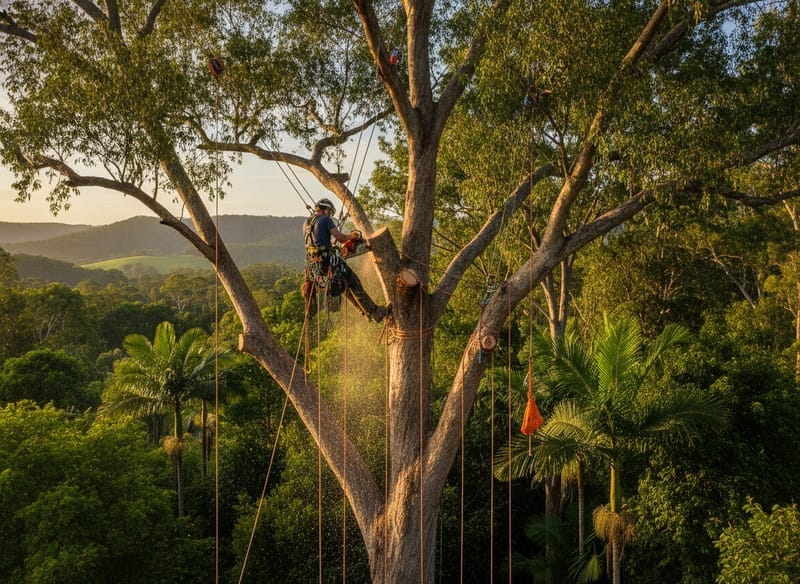
In tight suburban blocks or steep terrain where an Elevating Work Platform (EWP) cannot reach, our AQF Level 3 climbing arborists use double-rope techniques to ascend safely. We rig heavy sections of timber and lower them with friction devices to avoid impact damage to the structures below.
For massive white gums or oaks that have completely uprooted, we utilize high-powered ground saws (like the MS500i or 572XP) to cross-cut the timber. We manage the release of tension in wind-thrown root plates carefully, ensuring the root ball sits back down safely rather than snapping upright.
Emergency work often involves insurance claims. Before we make a single cut, we thoroughly document the damage with photographs and provide itemised, industry-standard reporting to ensure your assessor has exactly what they need for rapid claim processing.
When a tree emergency strikes, every minute counts. We have refined our process to deliver swift, safe, and decisive action from the moment you call. 1. Dispatch and Triage When you report a fallen or dangerous tree, we triage the situation based on risk to life and property. Our crew mobilizes with the necessary climbing gear, chainsaws, and heavy machinery, aiming for a response time to your site. 2. Site Assessment and Hazard Identification Upon arrival, our lead arborist conducts a rapid but thorough hazard assessment. We identify live power lines, compromised structures, and the tension points within the fallen timber to formulate a safe extraction plan. 3. Make-Safe and Dismantling We prioritize the make-safe phase—removing the immediate weight off roofs or driveways and securing loose canopy limbs. Using advanced rigging, we systematically dismantle the hazardous sections, lowering heavy timber safely to the ground without causing secondary damage. 4. Processing and Site Cleanup Once the danger is neutralized, we use commercial-grade wood chippers to process the canopy and tipper trucks to remove heavy logs. We leave your property clean, safe, and ready for any necessary building repairs, handing you the required photographic reports for your insurer.
We run a strictly compliant arboriculture operation. Every emergency response is handled by AQF Level 3 climbing arborists, backed by AQF Level 5 consulting arborists when formal risk assessments are required. We hold comprehensive Public Liability and WorkCover insurance, protecting your property entirely while we operate on-site. All pruning of damaged but salvageable trees is strictly performed to AS4373 (Pruning of Amenity Trees) standards. We never engage in dangerous topping or lopping, which only creates future hazards. Furthermore, we navigate local council regulations on your behalf, ensuring that emergency removals of dangerous trees are fully documented to satisfy legal exemptions.
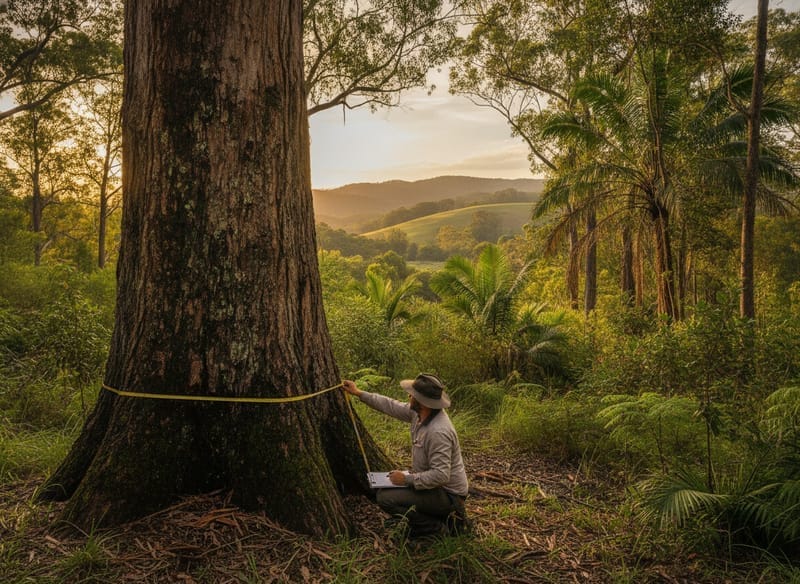
Dealing with Emergency Tree Removal Youngtown requires deep local knowledge. This area features a mix of established residential blocks and rural-residential fringes extending toward Relbia. Our local trees, particularly massive white gums and heavy black peppermints, are highly susceptible to wind-throw when the dolerite soils become waterlogged during our wet Launceston winters. Additionally, the fierce gale-force winds from September to January put immense sail pressure on newly leafed deciduous exotics like English oaks and elms. Under the Tasmanian Planning Scheme - Launceston, removing a tree usually requires navigating overlays like the Natural Assets Code or Local Historic Heritage Code. However, state exemptions allow for the removal of trees presenting an unacceptable safety risk or actively damaging a building. Our AQF Level 5 arborists provide the essential written assessment and pre-work photographic evidence required by the council, ensuring your emergency clearing is entirely lawful and compliant.
Once the immediate hazard is cleared, it is crucial to assess the rest of your canopy. Storms that cause one tree to fail often inflict unseen structural damage, such as twisting or root heave, on neighboring trees across your property. We highly recommend scheduling a comprehensive site inspection within a few weeks of a major storm event. Our arborists can identify hanging deadwood, micro-cracks in branch unions, and compromised root systems before the next high-wind event hits. Proactive maintenance—such as weight reduction pruning or deadwooding—is the most effective way to prevent future tree emergencies.
Emergency work is priced based on the immediate resources required and the complexity of the hazard.
We provide clear, upfront pricing before we begin any emergency make-safe work.
Help available in Youngtown and surrounding areas.